Dog eye infections are a common health issue that our canine companions face, and while many cases are mild, others can worsen quickly without proper care. Redness, discharge, or squinting can be uncomfortable for dogs and concerning for pet parents. Being aware of the possible causes and how to spot more serious dog eye infection symptoms can make all the difference in keeping your dog comfortable and protecting their vision.
This Sploot Vets guide covers what you need to know about dog eye infections, including common causes, symptoms, home care tips, and when to seek veterinary care.

What Causes Dog Eye Infections?
Dog eye infections can develop for several reasons, ranging from environmental irritants to underlying medical conditions. Here are some of the common causes of dog eye infections:
- Bacteria – Bacterial dog eye infections can be secondary to irritation, injury, or another eye issue.
- Viruses – Common transmissible viruses that are linked to dog eye infections include canine distemper virus, canine herpesvirus, canine adenovirus, and canine influenza. Often, these viral infections will produce other systemic symptoms like fever and lethargy.
- Allergies in dogs – Pollen, dust, or mold can trigger inflammation and irritation in a dog’s eye upon contact. This can then lead to secondary dog eye infections, along with other symptoms like itchy skin, shedding, dog sneezing, and so on.
- Debris or foreign material – Dirt, grass, or sand trapped in the dog’s eye can irritate the eye and lead to bacterial canine eye infections.
- Trauma or common pet injuries – Scratches to the eye during playtime, whether from the environment or other pets, can cause canine eye infections due to surface pathogens.
- Underlying health issues – Dry eye in dogs (keratoconjunctivitis sicca) and eyelid abnormalities can make a dog’s eyes more susceptible to infections.
- Cherry eye in dogs – This condition can lead to infections both by exposing the gland to irritants and bacteria, and by potentially reducing tear production over time, weakening the eye’s natural defenses.
Note: Eye infections in dogs can sometimes be a secondary complication of an underlying problem. Additionally, eye infections can also lead to loss of vision if left untreated. This is why a veterinary exam and prompt dog eye infection treatment is always recommended.
Common Dog Eye Infection Symptoms
Dog eye infection symptoms can vary depending on the cause, but common signs to look for include:
Mild Symptoms:
- Redness – A bloodshot or inflamed appearance of the dog’s eye. Blood flow increases in the area as a response to irritation or infection.
- Discharge – Clear, yellow, green, or crusty buildup. This develops as the eye produces extra fluid or pus to flush out bacteria, debris, or irritants.
Note: Pet parents can try using a mild, non-medicated eye wash for dogs. If symptoms improve within 24 hours, a vet visit may not be necessary.
Serious Symptoms:
- Swelling – Puffy eyelids or inflamed tissues around the dog’s eye. This happens when inflamed tissues around the eye retain fluid as part of the immune response.
- Squinting or blinking – These could be signs of eye sensitivity or pain in dogs. This is a protective reflex caused by pain, light sensitivity, or surface irritation of the eye.
- Pawing or rubbing at the eye – This is a behavioral sign that a dog is trying to relieve discomfort, itchiness, or a foreign-body sensation.
- Tear staining – This is due to the overflow of excess tears. The stains are caused by iron-containing pigments in the dog’s tears, showing more noticeably on light-colored fur.
Note: If your dog is experiencing any of the above more serious dog eye infection symptoms, reach out to your veterinarian for the next steps.
What Dog Eye Discharge Colors Might Mean
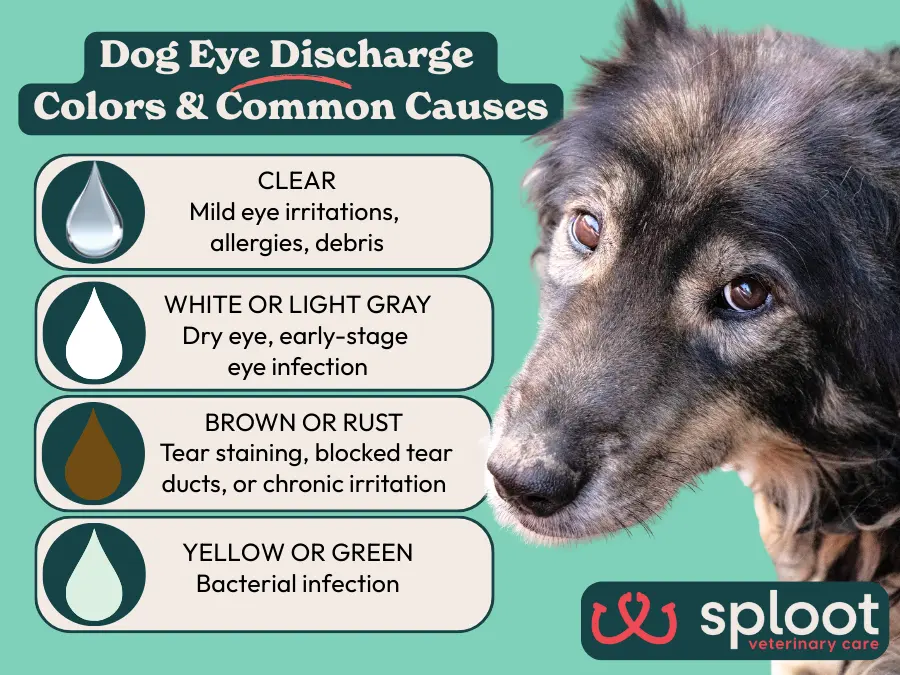
The color of a dog’s eye discharge can offer helpful clues about what’s going on. Here is what each color could mean:
1. Clear or Watery Eye Discharge
Clear or watery eye discharge in dogs is often linked to mild eye irritations, which can be due to canine allergies, dust, and other small debris that can get into the dog’s eye. If your dog has this color of eye discharge, monitor their condition for the next 24 hours. If their symptoms persist or worsen, contact a veterinarian.
2. White or Light Gray Eye Discharge
Typically, white or light gray eye discharge in dogs is caused by dry eye or an early-stage eye infection. This can happen when reduced tear production or irritation leads to mucus building up instead of being flushed away. If the discharge persists beyond a day or two, worsens, or is paired with redness, squinting, or discomfort, it would be best to take your dog to the vet.
3. Brown or Rust-Colored Eye Discharge
Brown eye discharge in dogs is often associated with tear staining, blocked tear ducts, or chronic irritation that causes tears to overflow. If staining appears suddenly, is excessive, or occurs alongside redness, swelling, or recurrent infections, it is generally recommended to schedule a vet visit.
4. Yellow or Green Eye Discharge
Yellow or green eye discharge is commonly caused by a bacterial infection, as white blood cells and debris collect in the eye and create thick, colored discharge. Same-day veterinary care is recommended, especially if swelling and pain are present.
How to Care for a Dog Eye Infection at Home
Home care can help keep your dog comfortable while you monitor symptoms or wait for a vet appointment; however, it should never replace professional dog eye infection treatment when needed.
Dog Eye Infection Home Remedy You Can Try
This simple dog eye infection home remedy is for supportive care only and is safest for mild eye irritations.
- Sterile saline solution – This dog first aid kit item can help flush away discharge building up around your dog’s eye. Make sure to use a non-medicated saline solution or an eye wash formulated for dogs. Vetericyn Plus® is an example of an eye wash formula that is safe for home use, recommended by some vets.
- Clean, damp cloth or gauze – After flushing your dog’s eye with a mild, pet-friendly solution, use a clean pad or gauze to pat the area around each eye gently. Use a different pad or gauze for each eye to prevent the spread of the infection.
What to Avoid:
Whether your dog has mild or severe dog eye infection symptoms, it’s best to avoid using the following:
- Human eye drops or medications – These can worsen the condition or cause damage.
- Essential oils or herbal remedies – These are not proven safe for canine eyes.
- Old or leftover prescriptions – Even if symptoms look similar, it’s always best to avoid self-medicating.

When to Call the Vet for a Dog Eye Infection
If your dog has any eye-related symptoms that don’t improve within 24 hours or worsen, it’s always best to contact a veterinarian.
In addition, the following signs may indicate a more serious eye infection or issue that needs prompt dog eye infection treatment to protect your dog’s eyesight:
- Green or yellow discharge
- Visible pain, squinting, or the eye staying closed
- Swelling that increases rapidly
- Cloudy or blue-tinted eyes
- Vision-related problems or bumping into objects
Note: For both persistent and severe symptoms, we recommend seeking urgent veterinary care. At Sploot Vets, we offer same-day urgent care. Call us at (720)770-8656 to schedule a same-day urgent care appointment for dog eye infections and other health issues.
How Sploot Vets Can Help
At Sploot Vets, we are here to provide hassle-free, all-in-one vet care. We help pet parents navigate dog eye infections and other related concerns with confidence:
Top-Tier, Fear Free Veterinary Care
With Sploot’s experienced vets and state-of-the-art facilities, you can be sure your dog gets excellent care for a variety of health issues. We also offer a Fear Free veterinary approach that keeps your pup as comfortable as possible in every vet visit.
Same-Day Urgent Care (Skip the ER)
Sploot offers extended clinic hours, 7-day-a-week availability, and urgent care services for eye issues, so you can skip the long ER waits while still getting timely care.
Tele-Triage & Real-Time Support
Our experienced veterinary professionals provide tele-triage and real-time guidance over the phone, helping you decide whether your dog needs a scheduled vet visit or same-day urgent care.

How to Prevent Future Dog Eye Infections
While not every dog eye infection can be prevented, consistent daily care and routine veterinary attention can significantly reduce your dog’s risk.
- Regular eye checks – Especially for breeds prone to eye issues (e.g., Pugs, Shih Tzus, Boxers).
- Keep fur trimmed around the eyes – Long fur can trap dirt and rub against the eye, increasing inflammation. For safety, you can have your dog’s fur trimmed by a trusted professional groomer. Sploot Medical Director Dr. Marissa Sallee also notes: “Carefully using a small comb, such as a flea comb, to keep the fur neat and brushed, and/or using products like Optixcare eye cleaning wipes are also good options for cleaning the fur around your dog's eyes.”
- Routine wellness exams –These visits help catch early signs of dry eye, eyelid abnormalities, or other underlying conditions before infections develop.
- Treatment for allergies in dogs – Seasonal allergies (e.g., fall allergies in dogs) can lead to chronic eye irritation that invites infection.
Next Steps for Treating Your Dog’s Eye Infection
Most dog eye infections are highly treatable, especially when addressed early. If you notice changes in your dog’s eyes, trust your instincts and seek care sooner rather than later. Sploot Veterinary Care is ready to support you every step of the way.
With vet clinics in Colorado Springs, Denver, and Chicago, extended hours, and locations open 365 days a year, Sploot makes it easier to get the care your pet needs—right when you need it.
Easily book your appointment online or through the Sploot Vets app! You can also call us at (720) 770-8656 for urgent concerns.