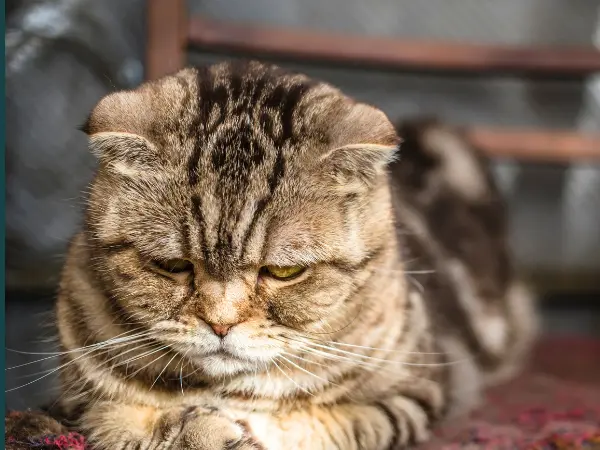


Cats can experience anxiety for many reasons, from changes in their home environment to being separated from their pet parent. The most common signs of cat anxiety include excessive meowing, scratching, hiding, litterbox accidents, loss of appetite, and/or aggression.
Anxiety meds for cats can be helpful for both short- and long-term cases of feline anxiety and are often prescribed as part of a multimodal treatment approach.
In this Sploot Vets guide, we discuss the most common anti-anxiety meds for cats, how they work, and other helpful information about treating feline anxiety.
How Do You Treat Anxiety In Cats?
Typically, the most effective way to treat anxiety in cats is to use a multimodal approach, which can include two or more of the following:
- Anxiety meds for cats – these can be used on a one-off, short-term, or long-term basis, depending on what type of anxiety your cat is diagnosed with.
- Calming supplements for cats – these help reduce stress-related behaviors and promote emotional balance, often using calming ingredients like beneficial amino acids and probiotics without causing sedation.
- Environmental changes – this can include reducing noise, adding toys for enrichment, additional litter boxes, more food and water stations, and more sleeping areas or cat trees.
- Cat pheromone diffusers – these release synthetic calming pheromones that mimic natural feline signals, helping reduce anxiety by creating a sense of safety and familiarity.
- Behavioral training – this can take the form of desensitization or counterconditioning, helping cats gradually feel safer around triggers and replace fearful reactions with calm, positive associations.
I. Short-Term Anxiety Meds for Cats [As-Needed]
Short-term anti-anxiety meds for cats are typically used for situational anxiety in cats, which occurs due to specific triggers, such as fireworks, travelling with your cat, vet visits, and the like. Additionally, short-term anxiety meds for cats can also be prescribed as part of the treatment plan for separation anxiety in cats.
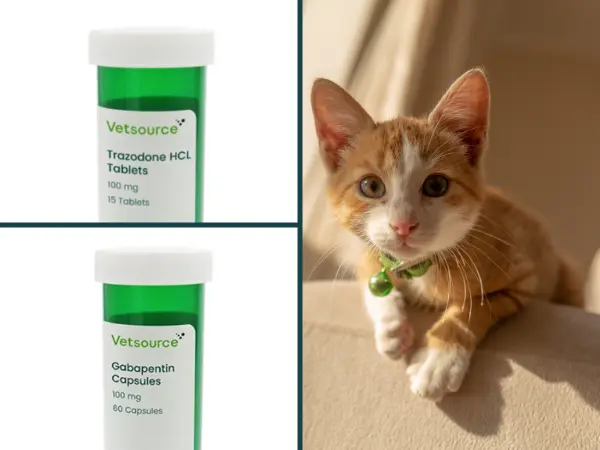
1. Gabapentin
- Drug Class: Anticonvulsant; Anxiolytic; Neuropathic Pain Analgesic
- Usage: Short-term or as-needed for cat anxiety; works in 1 to 2 hours. It can also be used long-term (as part of combination therapy) for chronic feline anxiety.
- Duration of Anti-Anxiety Effects: Can last for 8 to 12 hours
- Can it make cats sleepy?: Yes, gabapentin can make your cat sleepy
- Available on SplootRX online pet pharmacy. Get 35% off (up to $20) on your first order with the promo code AUTO35
While gabapentin is an anticonvulsant, it can also be used as an anti-anxiety medication for cats. Gabapentin helps reduce cat anxiety by calming overactive nerve signals, creating a gentle sedative and anxiolytic effect that helps cats feel more relaxed during stressful events.
Gabapentin is one of the most commonly prescribed short-term anxiety meds for cats, along with trazodone. Compared to trazodone, it also has fewer side effects.
Note: Gabapentin also has pain-relieving properties, which can be helpful in cases where a cat’s anxiety is aggravated by pain or discomfort (e.g., vet visits for dental pain, travel for cats with arthritis).
2. Trazodone
- Drug Class: Serotonin antagonist and reuptake inhibitor (SARI)
- Usage: Short-term or as-needed for cat anxiety; works in 1 to 3 hours
- Duration of Anti-Anxiety Effects: Can last for 6 to 12 hours
- Can it make cats sleepy? Yes, trazodone can make your cat sleepy at higher doses.
- Available on SplootRX online pet pharmacy. Get 35% off (up to $20) on your first order with the promo code AUTO35
Serotonin is a neurotransmitter that promotes relaxation and well-being in cats.
As a serotonin antagonist and reuptake inhibitor (SARI), trazodone increases serotonin in the cat’s brain, thus helping reduce cat anxiety.
Trazodone is one of the most commonly prescribed anti-anxiety meds for cats because it provides reliable calming effects and has a favorable safety profile. In a study, it is also shown to produce more sedation than gabapentin.
3. Pregabalin (Bonqat)
- Drug Class: Anticonvulsant
- Usage: Short-term or as-needed for acute cat anxiety; works in 30 minutes to 1 hour.
- Duration of Anti-Anxiety Effects: can last for several hours
- Can it make cats sleepy?: Yes, pregabalin (Bonqat) can make your cat sleepy.
Similar to gabapentin, pregabalin is an anticonvulsant medication that can also be used to treat anxiety in cats. Pregabalin works by reducing the excitability of nerve cells, creating a calming effect that helps ease fear and anxiety in cats. It works similarly to gabapentin but has longer-lasting effects due to its longer half-life.
Unlike trazodone and gabapentin (which are used off-label), pregabalin (Bonqat) is FDA-approved for cat anxiety, specifically for anxiety linked to transportation and veterinary visits.
Note: Even though pregabalin is FDA-approved, its suitability for treating cat anxiety still depends on the case. Trazodone and gabapentin still have a longer and more established track record of veterinary use.
II. Long-Term Anti-Anxiety Medications for Cats
Long-term anti-anxiety meds for cats are typically prescribed for chronic cases of social, generalized, or age-related cat anxiety. These are often prescribed when all other anti-anxiety medications and environmental changes have proven to be unsuccessful.
Long-term anxiety medications for cats are typically prescribed in combination with behavioral training, environmental adjustments, supplements, and/or compatible short-term anxiety meds, depending on the cat’s individual needs.
Currently, Selective Serotonin Re-uptake Inhibitors (SSRI) medications, which are used off-label for cats, are the first-line choice for treating long-term anxiety in cats; however, other drug classes may be useful when SSRIs are not effective or well-tolerated by the cat.
Note: Long-term anti-anxiety meds for cats can take several weeks before producing desired effects. These medications can have serious side effects if stopped abruptly, therefore the dose needs to be weaned down at the direction of a veterinarian if needed.
Additional Note: These medications are used off-label for cats, meaning they are not specifically FDA-approved for feline use but are commonly and safely prescribed by veterinarians based on clinical evidence and experience.
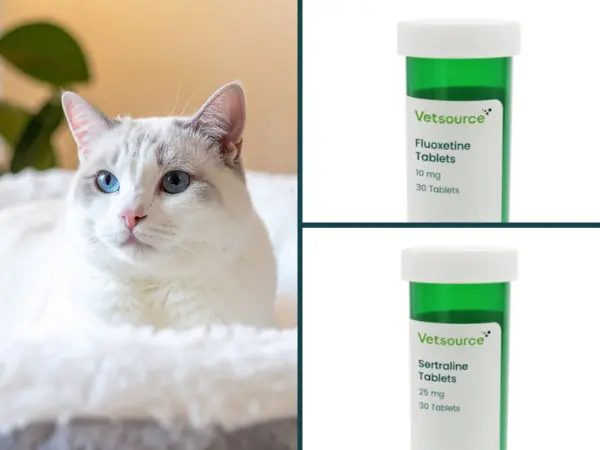
1. Fluoxetine
- Drug Class: Selective Serotonin Reuptake Inhibitor (SSRI)
- Brands: Prozac®, Reconcile®
- Usage: Long-term usage for social, generalized, or age-related cat anxiety; takes several weeks to reach full effect.
- Available on SplootRX online pet pharmacy. Get 35% off (up to $20) on your first order with the promo code AUTO35
Fluoxetine, also known by its brand names Prozac and Reconcile, is one of the most commonly prescribed anti-anxiety medications for cats with chronic anxiety. It works by boosting serotonin levels in the brain, which helps reduce chronic anxiety, compulsive behaviors, and social stress in cats.
Fluoxetine is often a first-choice SSRI for cats with anxiety due to its strong track record, minimal side effects, and predictable performance.
2. Sertraline
- Drug Class: Selective Serotonin Reuptake Inhibitor (SSRI)
- Brands: Zoloft®
- Usage: Long-term usage for social, generalized, or age-related cat anxiety; takes several weeks to reach full effect.
- Available on SplootRX online pet pharmacy. Get 35% off (up to $20) on your first order with the promo code AUTO35
Sertraline, also known by its brand name Zoloft, is another SSRI that works by increasing serotonin levels to support emotional stability and reduce chronic anxiety in cats. It is often used when fluoxetine isn’t well-tolerated or doesn’t provide a full response.
Sertraline is considered safe and effective, though it has a smaller body of research in cats compared to fluoxetine.
3. Paroxetine
- Drug Class: Selective Serotonin Reuptake Inhibitor (SSRI)
- Brands: Paxil®
- Usage: Long-term usage for social, generalized, or age-related cat anxiety; takes several weeks to reach full effect.
Paroxetine is an SSRI, functioning in a similar way to fluoxetine and sertraline. It effectively treats chronic anxiety by stabilizing serotonin levels and may be used when cats cannot tolerate fluoxetine or sertraline.
Paroxetine is less commonly prescribed because of potential side effects like increased appetite and gastrointestinal issues in cats.
4. Buspirone
- Drug Class: Non-benzodiazepine anxiolytic
- Brands: BuSpar®, Bustab®
- Usage: Long-term usage for social and generalized anxiety in cats; takes several weeks to reach full effect.
Buspirone is an anti-anxiety medication that works on serotonin receptors differently from SSRIs. It is especially helpful for social anxiety in cats as well as stress-induced urine marking. It is known to boost confidence in shy cats, with pet parents observing that it can make some cats more affectionate.
Buspirone is considered safe for most cats, but it is not as universally effective for all kinds of cat anxiety. In addition, some cats may also have increased aggression as a side effect of this medication.
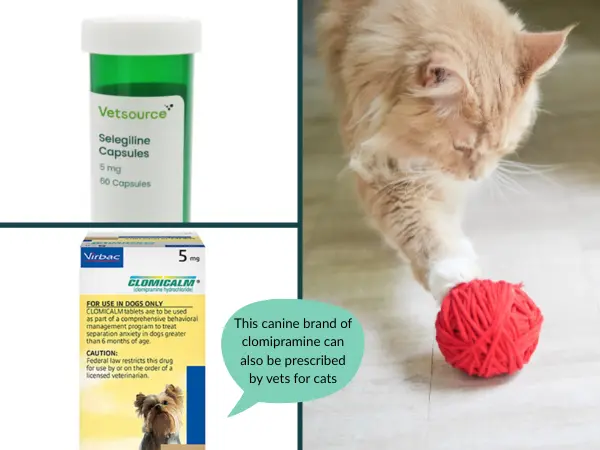
5. Clomipramine
- Drug Class: TCA (Tricyclic Antidepressant)
- Brands: Clomicalm® (canine brand), Anafranil®
- Usage: Long-term usage for social or generalized cat anxiety; takes several weeks to reach full effect
- Available on SplootRX online pet pharmacy. Get 35% off (up to $20) on your first order with the promo code AUTO35
Clomipramine is a tricyclic antidepressant (TCA) that can be used as an anti-anxiety medication for cats. It helps reduce chronic anxiety by boosting serotonin and norepinephrine levels in the brain, thus improving mood while also retaining alertness.
This medication can be helpful for chronic anxiety in cats, but it is generally less preferred than the other medications on this list, especially for older cats, due to its side effects. A few examples of potential side effects include constipation, diarrhea, vomiting, blood pressure changes, and urinary retention.
6. Selegiline
- Drug Class: Monoamine Oxidase Type B Inhibitor (MAO-B inhibitor)
- Brand: Anipryl® (canine brand); Eldepryl®, Zelapar®, Deprenyl®
- Usage: Long-term usage for cognitive dysfunction and age-related cat anxiety – takes several days or a few weeks to reach full effect.
- Available on SplootRX online pet pharmacy. Get 35% off (up to $20) on your first order with the promo code AUTO35
Selegiline is not technically classified as an anxiety medication for cats, but it is sometimes prescribed to help manage age-related anxiety associated with feline cognitive dysfunction.
As dopamine naturally declines with age, some senior cats develop confusion, nighttime vocalization, and increased anxiety. By inhibiting Monoamine Oxidase Type B (MAO-B), Selegiline increases dopamine levels in the brain. This can support better alertness, cognitive function, and emotional stability in older cats with feline cognitive dysfunction.
Note: Looking to get a prescription refill for your cat’s long-term anxiety meds? At Sploot Vets, this is easier than ever with the medication refill feature on the Sploot Vets app.
III. Over-The-Counter (OTC) Anti-Anxiety Meds for Cats
Prescription anti-anxiety meds for cats are typically stronger and more reliable than calming supplements. However, OTC calming supplements for cats can be helpful for mild cat anxiety or if a cat does not tolerate any of the above prescription anxiety meds well.
Note: OTC calming supplements for cats do NOT require a prescription; however, it’s always best to consult a veterinarian before using them to ensure proper dosing and to avoid contraindications.
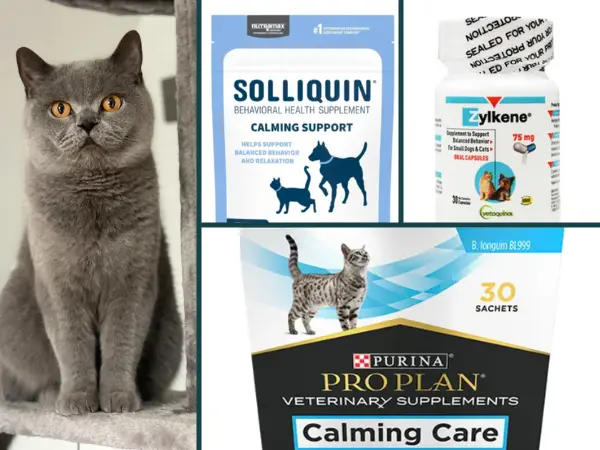
1. Solliquin® Soft Chews for Cats & Dogs
- Type: Calming supplement (chews) for cats
- Usage: Short-term or long-term; given days or weeks before the stressful event, according to your vet’s recommendations
- Can it make cats sleepy? No, Solliquin soft chews are formulated to be non-sedating.
- Available on SplootRX online pet pharmacy. Get 35% off (up to $20) on your first order with the promo code AUTO35
Solliquin Soft Chews for Cats & Dogs is a popular calming supplement for cats that promotes relaxation without causing sedation. It contains L-theanine, an amino acid from green tea that helps stimulate alpha brain waves to support a relaxed yet alert mental state. It also features a Magnolia and Phellodendron plant extract blend, shown to work synergistically to reduce stress in cats.
Additionally, Solliquin includes a specialized whey protein concentrate that provides essential amino acids, including those that help support the natural production of glutathione and serotonin, which are important for healthy stress regulation in cats.
2. Zylkene® Capsules for Cats & Dogs
- Type: Calming supplement (capsules) for cats
- Usage: Short-term or several months, depending on vet recommendations; given at least 5 to 7 days before the stressful event
- Can it make cats sleepy? No, Zylkene capsules are formulated to be non-sedating.
- Available on SplootRX online pet pharmacy. Get 35% off (up to $20) on your first order with the promo code AUTO35
Zylkene is a gentle, non-sedating calming supplement containing hydrolyzed bovine milk protein, providing alpha-casozepine, a natural compound known for its calming effects on cats.
Zylkene is a useful option for cats experiencing mild anxiety from travel, changes at home, vet visits, or other similar situations. It is well tolerated, easy to give, and ideal for both short-term and long-term calming support.
3. Purina Pro Plan Calming Care Supplement
- Type: Calming supplement (powder) for cats
- Usage: Short-term or long-term; can take 6 weeks to reach its full effect
- Can it make cats sleepy? No, the Purina Pro Plan Calming Care Supplement is not known to cause sleepiness.
- Available on SplootRX online pet pharmacy. Get 35% off (up to $20) on your first order with the promo code AUTO35
Purina Pro Plan Calming Care Supplement is a probiotic powder designed to support calm behavior in cats. It’s easy to administer (1 packet sprinkled over food once daily) and is well suited for cats experiencing stress, anxiety, or changes in routine.
With the proprietary probiotic Bifidobacterium longum BL999, this calming supplement for cats helps reduce anxiety-related signs such as pacing and encourages positive behaviors like playing and seeking social contact. It also helps regulate cortisol levels while also supporting the cat’s immune system.
What are the Different Types of Cat Anxiety?
There are 5 main types of cat anxiety. All of these can be treated with cat anxiety meds and/or other strategies like behavioral training, desensitization, and counterconditioning.
1. Separation Anxiety in Cats
Separation anxiety in cats is a stress response that occurs when a cat is left alone or separated from a specific person, cat, or other pet. This is typically more common in clingy cats, highly bonded cats, and single-pet households.
The most common symptoms of separation anxiety in cats include excessive meowing, overgrooming, inappropriate urination, destructive behaviors, and loss of appetite during separation. Cats with separation anxiety may also follow their pet parent closely before they leave and/or be overly enthusiastic when their pet parent returns.
2. Social Anxiety in Cats
Social anxiety in cats occurs when a cat feels unsafe or stressed around other cats, pets, or people. Feline social anxiety is more common in multi-pet households. While some cats prefer to be alone occasionally and are cautious around strangers, social anxiety in cats is different; it is an unhealthy and often prolonged level of stress due to other pets or people.
Common signs of this type of cat anxiety include frequent hiding, overgrooming, avoiding certain areas of the home, loss of appetite, and litterbox issues.
3. Situational Anxiety in Cats
Situational anxiety in cats refers to short-term but heightened stress triggered by specific events, environments, or sensory stimuli. Common triggers include vet visits, travel, loud noises, grooming, or the presence of unfamiliar people.
Cats experiencing situational anxiety may hide, freeze, pant, vocalize, or attempt to escape carriers or rooms. Physical signs like dilated pupils and tense body posture are also typical.
4. Generalized Anxiety in Cats
Generalized anxiety in cats is a persistent state of worry or hypervigilance that occurs without a single clear trigger. It may develop due to early-life stress, chronic environmental instability, medical issues, or genetic factors.
Affected cats often startle easily, hide frequently, or appear restless. Overgrooming, appetite changes, and tension with other pets may also occur.
5. Age-Related Cat Anxiety (Cognitive Dysfunction)
Age-related cat anxiety typically stems from cognitive decline in senior cats. Common symptoms include nighttime vocalization, hunger despite being fed, uncharacteristic clinginess, altered sleep patterns, and getting confused in familiar spaces. Many cats with age-related anxiety also show litterbox accidents or decreased tolerance for handling.
Final Thoughts on Anxiety Meds for Cats
Having the right anxiety medication for your cat can help reduce their stress and improve their quality of life. Because every cat responds differently, expert guidance from a trusted veterinarian is essential, and it may take some time to determine which medication works best.
In addition, while medication can be an important part of treatment, behavioral training and environmental modifications are also crucial, especially for long-term or generalized anxiety in cats.
While cat anxiety medications can be helpful, behavioral training and environmental modification are equally important—especially for long-term or generalized anxiety in cats.
How Sploot Vets Treats Anxiety in Cats
At Sploot Vets, we take a comprehensive approach to diagnosing and treating cat anxiety. We take the following steps:
Ruling Out Medical Conditions
Our veterinarians begin by ruling out underlying medical conditions that may mimic or cause anxiety, such as pain in cats, hyperthyroidism, or urinary issues.
Determining the Kind of Anxiety Your Cat Has
Once medical causes are excluded, our team works to determine the type of anxiety your cat suffers from, whether it’s situational, social, separation-related, generalized, or age-related. We will also work with you to map out their common triggers, if any
Note: Your observations, along with any videos showing your cat’s anxious behaviors, are very helpful in this step. At Sploot, we always welcome your input, along with any questions you may have.
Treating Your Cat’s Anxiety: Medications & Beyond
Next, we create a customized treatment plan that may include anti-anxiety medications for cats and/or feline calming supplements. We may also provide environmental recommendations (e.g., reducing stressors, using cat pheromones) as well as behavioral modification strategies to support long-term improvement.
Sploot Vets: All-in-One Cat Vet Care for Health & Wellness
Sploot Vets provides top-tier, all-in-one vet care for your cat’s physical health and emotional well-being. Along with our comprehensive pet wellness exams and behavioral consultations, we also handle more than 95 percent of your cat’s vet care needs. We provide preventive care, urgent care, and emergency vet services, all under one roof.
If your cat is struggling with any type of anxiety and you’re wondering if cat anxiety meds can help, we’re here to provide expert guidance. We also offer a Fear Free veterinary experience to ensure your cat’s comfort.
Visit one of our conveniently located vet clinics in Chicago, Denver, and Colorado Springs, open 365 days a year with extended hours for your convenience.
Book your appointment online or through the Sploot Vets pet care app today!