

It’s quite common for dogs to have broken, cracked, or bleeding nails, especially during play, vigorous walks, and nail clipping. Typical signs include visible bleeding or a split nail, limping or favoring one paw, and frequent paw licking.
While some minor nail injuries in dogs can be safely managed at home with basic first aid, others are more painful or prone to infection. In those cases, a prompt trip to the vet is important to prevent complications.
In this Sploot Vets guide, we talk about dog broken nails, first aid tips, and when to take them to the vet.
Causes of Bleeding, Broken, or Cracked Nails in Dogs
A dog’s nail is made up of a hard outer shell and a sensitive inner core called the quick. The quick contains blood vessels and nerves, which is why nail injuries can bleed significantly and cause pain when the quick is affected.
The most common causes of bleeding, broken, or cracked nails in dogs include:
- Improper nail trimming – Cutting the dog’s nail too short can damage the quick and lead to immediate bleeding.
- Nails caught on objects – Fluffy carpets, furniture, fencing, or outdoor debris can snag a nail and pull it.
- Overgrown dog nails – Longer nails are more likely to catch on surfaces, bend, or snap, increasing the risk of injury.
- Trauma during activity – Running, jumping, or rough play on hard or uneven surfaces can cause dog nails to crack or tear.

What to Do If Your Dog’s Nail is Broken, Cracked, or Bleeding
If your dog’s nail is bleeding or shows visible breakage, the next steps depend on the severity of the injury. Some nail issues are minor and can be managed at home with proper first aid, while others require veterinary treatment.
Do I Need to Take My Dog to The Vet For a Broken Toenail?
We recommend taking your dog to the vet if you observe the following:
- The nail is partially or fully torn off – This can be extremely painful for dogs and may require professional trimming, as well as bandaging and/or medication to prevent infections.
- Bleeding won’t stop after 10 minutes – This suggests the quick is significantly damaged, requiring veterinary attention.
- There is swelling, discharge, or limping – These signs, which can appear days after the incident, may indicate infection or deeper injury to the dog’s nails.
- Your dog shows signs of pain – Crying, snapping, reluctance to bear weight, and excessive licking or chewing on the nail can be signs of a deeper injury or infection.
Will a Dog’s Broken Nail Heal On Its Own?
In some cases, a dog’s broken nail can heal on its own if the damage is minor and the quick isn’t exposed. When the dog’s nail quick is damaged, even minor injuries need basic first aid to protect the nail and prevent infection.
Deeper breaks are painful, slow to heal, and more prone to infection; thus, they require both first aid and prompt veterinary care.
First Aid Tips for Dog Nail Injuries
If your dog has a broken or cracked nail, here are first aid tips depending on the severity of the injury.
Note: Cornstarch can be used as an alternative in the absence of styptic powder.
a. First Aid for Minor Nail Bleeding
Minor bleeding on a dog’s nail often appears as streaks of blood that smear against the floor or whichever surface they are on. This is typically caused when a short portion of the nail’s quick is clipped. Here’s what you can do when this happens:
- Stay calm and restrain your dog gently – Sudden movement can restart bleeding. You can press a paper towel, gauze, or clean cloth to the bleeding nail while getting styptic powder.
- Press a pinch of styptic powder, also known by the brand name Kwik Stop, directly to the nail with moderate pressure. Pack the styptic powder against the nail and hold your finger against it until the bleeding stops.
- It is often recommended to leave the styptic powder on the nail as a protective barrier to prevent the nail from bleeding again.
- Limit your dog’s activity for a few minutes afterward – This helps prevent the nail from bleeding again.
- For the next few days, monitor the condition of the nail. If signs of infection appear (i.e., pain, swelling, redness, bad odor, or pus), bring your dog to the veterinarian.
b. First Aid for Persistent or Steady Bleeding
A dog’s nail can bleed steadily, often spurting as the dog’s blood pressure increases due to pain. This can happen when a long portion of the quick is clipped. As long as the rest of the base of the nail is intact, you can try the following first aid steps for persistent nail bleeding in dogs:
- Calmly restrict your dog’s movement – This helps to minimize the bleeding. You can press a paper towel, gauze, or clean cloth to the bleeding nail while getting styptic powder.
- Pack styptic powder (Kwik Stop) against the tip of the dog’s nail. Larger pinches of styptic powder may be needed than in minor bleeding cases.
- If the bleeding continues, use a clean gauze to apply continuous pressure on the dog’s nail.
- If bleeding continues for more than 10 minutes, bring them to the vet. (If possible, place a cone on your dog’s head to prevent them from licking or gnawing at their paw. Bandage their paw securely, without cutting circulation.)
c. First Aid for Broken or Cracked Dog Nails
In some cases, your dog’s nail could appear broken, cracked, or missing. This typically happens due to running in rough terrain or snagging against something. Long or overgrown nails are especially at risk.
If your dog has a minor chip or crack without any bleeding, you can clean the nail and monitor it for the next few days. If signs of infection appear (i.e., pain, swelling, redness, bad odor, or pus), bring your dog to the veterinarian.
On the other hand, if the dog's broken nail is accompanied by significant bleeding, this means that the quick of the dog’s nail is severed or exposed. Here’s what to do next:
- Calmly restrict your dog’s movement to prevent the bleeding from getting worse.
- Whether or not the nail’s bleeding continues, it’s always best to bring your dog to an urgent care veterinarian for examination and treatment. (If possible, place a cone on your dog’s head and lightly bandage their paw.)

Preventing Broken, Cracked, or Bleeding Nails in Dogs
a. Trim Your Dog’s Nails Regularly
Overgrown dog nails are more likely to crack, split, snag, or break. This is why it’s important to trim your dog’s nails regularly, around once a month, as part of your dog’s routine care.
b. Avoid The Quick When Trimming Your Dog’s Nails
Nail trimming accidents are among the most common causes of bleeding nails in dogs. This typically happens when the nail’s quick is cut. To prevent this, train your dog to be calm during nail cutting and learn about proper dog nail trimming techniques.
c. Choose Dog-Nail-Friendly Rugs for Your Home
If your dog’s nails are frequently getting caught on rugs at home, you can consider opting for a more pet-friendly options. AVOID thick, high-pile rugs with loose loops; these are more likely to snag your dog’s nails. Instead, opt for thinner, low-pile or pile-free rugs.
d. Consider Dog Booties or Shoes for Certain Terrains
Some dogs suffer from broken nails when running or playing on rough, rocky, or icy surfaces. These surfaces can put extra stress on the dog’s nails, even if they’re not overgrown. In such situations, dog booties or shoes can provide an added layer of protection from both dog nail injuries and other paw injuries.

How We Treat Dog Broken Nails at Sploot Vets
Nail injuries can cause pain in dogs and potentially lead to infections if not treated promptly. At Sploot Vets, we provide thorough treatment for dog broken nails, which includes the following:
Urgent Vet Care (with Drop-Offs Available)
Dog nail injuries can happen suddenly, and our vet clinics offer convenient same-day and drop-off options for your dog’s urgent care needs.
Your dog gets prompt attention the moment they arrive. If their nail is still bleeding, our team will quickly control the bleeding and assess the injury.
Treating the Broken Nail & Preventing Infections
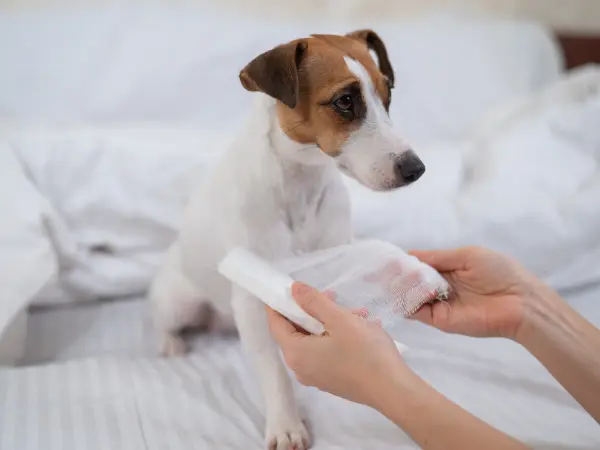
Our veterinarians carefully clean and treat the injured nail to support proper healing. We focus on protecting the nail bed and reducing the chances of complications. Depending on the severity, your dog’s paw may need to be bandaged, and a cone may be recommended to protect the area during recovery.
Our vets may also prescribe canine pain medications and antibiotics, along with instructions on caring for your dog’s healing nail.
Seamless Follow-Ups & Clear Communication
Our team provides clear aftercare instructions and a recommended date for your dog’s follow-up appointment. However, if healing concerns arise at any point, we are just a phone call away.

Sploot Vets: All-in-One Vet Care You Can Count On
Whether your dog has a broken or cracked nail or is facing other health concerns, we are always here to help. Sploot Veterinary Care provides all-in-one vet care, encompassing primary care, urgent care, and emergency vet services all under one woof™!
With our experienced team, modern facilities, and Fear Free approach, you can be sure that your canine companion gets next-level care.
Visit one of our vet clinics in Chicago, Colorado Springs, and Denver, open 365 days a year with extended hours to fit your schedule.
Easily book your appointment online or through the Sploot Vets app! You can also call us at (720) 770-8656 for urgent concerns.