Dogs can show pain in different ways, like limping, reduced appetite, vocalizing, and changes in energy or activity levels. Senior dogs, certain breeds, and dogs with chronic conditions (like osteoarthritis) are especially prone to discomfort. Dogs may also experience pain as they recover from injuries or surgery.
When dogs are in pain, veterinarians may recommend pain meds for dogs, formulated to ease discomfort, reduce inflammation, and support healing. This Sploot Vets guide breaks down what pain medications for dogs are, when they’re commonly used, and other helpful tips about pain relief for dogs.

What Can I Give My Dog for Pain?
The safest treatment for your dog’s pain can only come from a licensed veterinarian, as there are no over-the-counter pain meds for dogs. In addition, while pain medication for dogs can be helpful, veterinarians can also accurately diagnose and treat the underlying cause accordingly.
Depending on your dog’s case, veterinarians may recommend any or some of the following:
- Pain medications for dogs – these are specifically formulated for dogs, offering targeted relief while also reducing the risk of bad reactions. Pain meds for dogs are not available over the counter.
- Pain meds for humans (used off-label) – a few medications for people are sometimes used off-label for dogs; these are typically prescribed for chronic and neuropathic pain.
- Other pain relief remedies – options like warm or cool compresses, cold laser therapy, and veterinarian-approved supplements can support comfort and mobility, depending on the cause and severity of the dog’s pain.
Note: Over-the-counter pain medications for people are generally harmful or toxic to dogs, with many leading to organ damage and other severe symptoms. Avoid self-medicating your dog for utmost safety.
4 Pain Meds for Dogs for General Use [FDA-Approved]
Non-steroidal, anti-inflammatory drugs (NSAIDs) are the most commonly prescribed pain medications for dogs. These medications work by inhibiting cyclooxygenase-2 (COX-2)—the enzyme primarily responsible for driving pain and inflammation—while having little to minimal effect on cyclooxygenase-1 (COX-1), the enzyme that helps protect the gastrointestinal tract and kidneys.
- COX-2 preferential inhibitors block COX-2 more than COX-1 but are not exclusively selective.
- COX-2 selective inhibitors specifically target COX-2 with very minimal COX-1 impact.
1. Carprofen (Rimadyl, Quellin)
- Drug class: Veterinary NSAID (COX-2 preferential inhibitor)
- Can be used for: post-surgical pain in dogs, soft-tissue injuries, osteoarthritis
- Available as: chewable tablets, caplets, injectable (vet-only)
- Available on SplootRX online pet pharmacy.
Carprofen, also known by brand names Rimadyl, Quellin, and various generics, is a pain medication for dogs, most commonly prescribed for post-surgical pain and acute injuries. It can be used on a short- or long-term basis depending on the condition being treated.
The main advantage of using carprofen over other NSAIDs for dogs is that it has a long track record and predictable performance (since the 1990s) in providing pain relief for dogs.
Note: Because carprofen is a ‘preferential’ COX-2 inhibitor, it is slightly more likely to cause digestive upset in dogs, as well as loss of appetite, compared to newer NSAIDs on this list.
2. Meloxicam (Metacam)
- Drug class: Veterinary NSAID (COX-2 preferential inhibitor)
- Can be used for: Osteoarthritis, soft-tissue injuries, post-surgical pain in dogs
- Available as: tablets, capsules, oral liquid, injectable (vet-only)
- Available on SplootRX online pet pharmacy.
Meloxicam, also known by the brand name Metacam, is most commonly prescribed for osteoarthritis, even though it can also be used for other cases. This pain medication for dogs can be used on a short-term or long-term basis, depending on the case.
As a COX-2 preferential inhibitor, meloxicam works by inhibiting the enzyme that leads to pain and inflammation.
Note: While this drug is a preferential COX-2 inhibitor (similar to carprofen), it is relatively newer (approved for use in dogs in 2003). It’s also known to have a slightly lower chance of causing digestive upset in dogs when compared to carprofen.
3. Deracoxib (Deramaxx)
- Drug class: Veterinary NSAID (COX-2 selective inhibitor)
- Can be used for: post-surgical pain in dogs, soft-tissue injuries, osteoarthritis
- Available as: chewable tablet
- Available on SplootRX online pet pharmacy.
Deracoxib, also known by the brand name Deramaxx, is typically prescribed for post-surgical pain, especially for recovery from bone and joint surgeries. However, this pain medication can be prescribed for other issues as well, including osteoarthritis. Like other NSAIDs on this list, it can be used on a short- or long-term basis depending on the issue.
Deracoxib was first approved in 2002, meaning it’s been around roughly as long as meloxicam and firocoxib.
Note: This pain medication is a selective COX-2 inhibitor, meaning it has a reduced chance of causing digestive upset in dogs when compared to carprofen and meloxicam.
4. Firocoxib (Previcox)
- Drug class: Veterinary NSAID (COX-2 selective inhibitor)
- Can be used for: Osteoarthritis, post-surgical pain in dogs, soft-tissue injuries
- Available as: chewable tablets
- Available on SplootRX online pet pharmacy.
Firocoxib, also known by the brand name Previcox, is most commonly prescribed for osteoarthritis pain and orthopedic or soft-tissue surgery. It can be used on a long-term or short-term basis, depending on the case.
Of the four NSAIDs on this list, firocoxib is relatively new, being approved for use on dogs in 2004. However, it’s still approved at roughly the same time as meloxicam and deracoxib.
Note: This pain medication is also a selective COX-2 inhibitor (similar to deracoxib), meaning it has a reduced chance of causing digestive upset in dogs when compared to carprofen and meloxicam.

Pain Medications for Canine Osteoarthritis [FDA-Approved]
These next pain medications for dogs are specifically indicated for osteoarthritis. These come from different drug classes, offering different modes of action and extent of treatment for osteoarthritis.
5. Grapiprant (Galliprant)
- Drug class: NSAID (piprant class – EP4 receptor antagonist)
- Used for: Osteoarthritis pain, especially in dogs needing a GI-friendly option
- Available as: chewable tablets
- Available on SplootRX online pet pharmacy.
Grapiprant, also known by the brand name Galliprant, is typically prescribed for osteoarthritis pain in dogs and is used on a long-term basis to manage this condition.
As an EP4 receptor antagonist, grapiprant works by blocking a specific pain receptor rather than inhibiting enzymes that cause pain and inflammation.
Note: Grapiprant, approved for veterinary use in 2016, belongs to a newer class of NSAIDs that does not rely on cyclooxygenase (COX) inhibition. This greatly reduces the risk of gastrointestinal side effects compared to older NSAIDs. If a dog has osteoarthritis and is also prone to gastrointestinal upset from other NSAIDs, grapiprant may be a better alternative.
6. Adequan Canine
- Drug class: Disease-modifying osteoarthritis drug (DMOAD)
- Used for: Joint pain, osteoarthritis, and mobility support
- Available as: Injectable medication
- Available on SplootRX online pet pharmacy.
Adequan Canine, also known simply as Adequan, is typically prescribed for osteoarthritis and related joint pain. According to their website, this medication can help slow down the progression of osteoarthritis with timely treatment.
Adequan Canine is the only FDA-approved disease-modifying osteoarthritis drug (DMOAD). It reaches the joints within 2 hours of administration and helps restore damaged or inflamed joint tissues. However, this drug’s mechanism, as of this article’s update, is not known.
This medication comes in the form of injectables and is administered as a short-term series over a few weeks and may be repeated as needed.
Note: Since Adequan Canine is only intended for short-term use, it can be paired with other pain medications for dogs (compatible NSAIDs) if needed. While this medication is the only one in its drug class, it is not new; it was approved by the FDA in 1997.
7. Librela
- Drug class: monoclonal antibody (anti-NGF)
- Can be used for: chronic pain from osteoarthritis and other degenerative joint disease (DJD)
- Available as: monthly injection
Librela is a monoclonal antibody that targets nerve growth factor (NGF), a protein involved in sensitizing pain pathways. By binding NGF, Librela helps reduce the nerve signaling that amplifies pain associated with chronic joint disease. Unlike traditional pain medications that blunt pain sensation, Librela works by reducing the biological signals that make joints “hurt,” which often results in better comfort, improved mobility, and quality of life.
As a monoclonal antibody (not a non-steroidal anti-inflammatory drug, NSAID), Librela does not carry the same risks as chronic NSAID use (i.e., GI upset, kidney strain, or ulceration). This medication is a useful option for older dogs or pets with comorbidities.
In addition, because Librela is given as a monthly injection, Librela offers sustained pain control. This can simplify long-term pain management and reduce the need for daily oral medications.
Note: As with all pain therapies, Librela should be part of a comprehensive pain-management plan, which may include weight management, physical therapy, joint supplements, and regular re-evaluation. While Librela tends to have a favorable safety profile compared with long-term NSAID use, not all patients will respond equally; veterinarians should monitor clinical response and adjust care as needed.

What Human Painkillers Can You Give a Dog? [Off-Label Use]
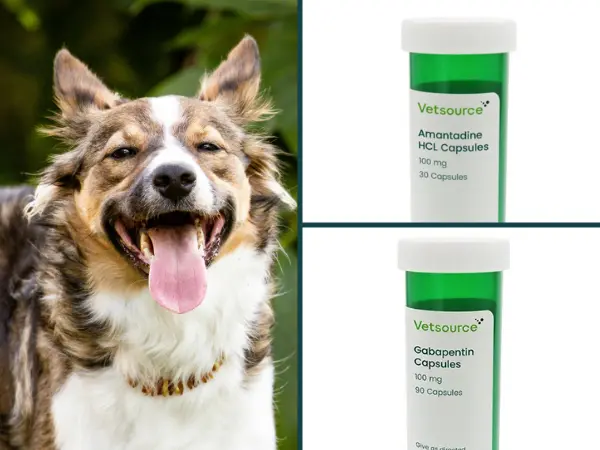
Pain medications like amantadine, gabapentin, and pregabalin were all developed for people but can also be used off-label, under strict veterinary supervision, to manage chronic pain and nerve pain in dogs.
When the first line of NSAIDs for pain relief is not enough or no longer working, these medications can serve as an alternative or as part of a combination treatment.
8. Amantadine
- Drug class: NMDA Antagonist
- Can be used for: chronic pain and nerve pain
- Available as: tablet, capsule, or liquid solution
- Available on SplootRX online pet pharmacy.
Amantadine, available under various generic names, is a human medication that can be used off-label for pain management in dogs. For people, amantadine is mainly used to treat certain neurological and mental health conditions.
When used off-label for dogs, amantadine is used for managing chronic pain and nerve pain. Amantadine works as a pain medication for dogs by blocking the NMDA receptor, a pain receptor in the dog’s nervous system. It can be used on a long-term basis when needed, with strict monitoring.
Amantadine is known for improving pain in dogs when NSAIDs for dogs or other pain medications are no longer enough on their own.
9. Gabapentin
- Drug class: gabapentinoid
- Can be used for: chronic pain and nerve pain
- Available as: tablet, capsule, or liquid solution
- Available on SplootRX online pet pharmacy.
Gabapentin, available under various generic names, is typically prescribed for nerve pain and chronic pain in dogs. It can be used on a short-term or long-term basis, with strict monitoring. For people, gabapentin is used for a variety of neurological issues.
As for dogs, gabapentin is used off-label for not just chronic pain and nerve pain, but also severe canine anxiety and seizure disorders.
As a gabapentinoid, gabapentin helps manage pain in dogs by reducing the release of neurotransmitters that amplify pain. It is known for being a gentle, widely used add-on when FDA-approved NSAIDs for dogs aren’t enough.
10. Pregabalin (Lyrica)
- Drug class: gabapentinoid
- Can be used for: chronic pain and nerve pain
- Available as: tablet, capsule, or liquid solution
Pregabalin, also known by the brand name Lyrica, is typically prescribed for moderate to severe nerve pain and chronic pain cases in dogs. It can be used as an alternative to gabapentin when needed and can also be used on a long-term basis with strict veterinary monitoring. For people, pregabalin is typically used for various neurological issues.
As for dogs, it can be used to treat other conditions aside from chronic pain, including severe canine anxiety and seizure disorders.
As a gabapentinoid, pregabalin helps manage pain in dogs by reducing the release of neurotransmitters that transmit pain signals. While this effect is similar to gabapentin, pregabalin is differentiated by its relatively more predictable absorption, potency, and longer-lasting effects than gabapentin.
Other Human Painkillers: Are They Safe for Dogs?
Most over-the-counter human painkillers are NOT safe or are toxic to dogs. However, some veterinarians may prescribe some of the following in very rare instances, and IF no safer alternative is available. In addition, if vets ever resort to using human pain medications, the dosages are strictly controlled and adjusted for safety, considering your dog’s overall health.
Note: NEVER use human painkillers on dogs without strict veterinary guidance.
1. Can I Give My Dog Aspirin for Pain?
No, avoid giving aspirin to your dog. This medication can cause stomach ulcers, internal bleeding, and unsafe drug interactions in dogs, making it too risky for home use.
2. Can I Give My Dog Paracetamol for Pain?
No, avoid giving paracetamol to your dog. This medication can damage a dog’s liver and red blood cells, and even small dosing mistakes can be dangerous.
3. Can I Give My Dog Tylenol or Acetaminophen for Pain?
No, avoid giving acetaminophen or Tylenol to your dog. This medication is unsafe for dogs and can lead to life-threatening liver damage and red blood cell destruction.
4. Can I Give My Dog Ibuprofen or Advil for Pain?
No, avoid giving ibuprofen or Advil to your dog. Ibuprofen is highly toxic to dogs because it can cause kidney failure and severe gastrointestinal ulceration. Typically, vets will not prescribe this human pain medication for dogs due to its many risks.

Pain Relief for Dogs: Other Tips
Pain relief for dogs is not just about finding an effective pain medication. There are other things pet parents can do, such as the following:
1. Seek Urgent Vet Care
When your dog is in pain due to an unknown cause, an injury, or after ingesting something they shouldn’t, reaching out to an urgent care veterinarian helps provide them with a timely diagnosis and treatment. Treatment includes pain management and addressing the underlying cause of pain as soon as possible. In many cases, urgent care can save your pup’s life or prevent other severe complications.
2. Cold Compress vs Warm Compress
Both cold and warm compresses can be helpful for soft tissue injuries and fractures, depending on how recent the injury is.
A cold compress can help reduce pain and swelling at the site of the newly sustained injury. Meanwhile, a warm compress can help reduce pain and facilitate healing in later stages.
Here is a quick guide on when to use which:
- Use a cold compress – for cases where the injury or fracture is less than 72 hours old. This is best done with veterinary guidance, while waiting for the next steps on getting urgent or emergency vet care. Make sure to wrap the ice or pack in a clean towel to prevent frostbite or skin damage.
- Use a warm compress – for soft tissue injuries, your veterinarian may recommend using a warm compress to help the tissues heal after 72 hours and the initial swelling has gone down. Ask your veterinarian about the best frequency and duration of using a warm compress for your dog’s case. In addition, wrap the warm compress in a towel if it’s too hot for the skin.
Note: In some cases, veterinarians may recommend using a cold compress (initially) and warm compress (after 3 to 5 days) as part of postoperative or post-surgical care for your dog. This can help reduce swelling and pain. You can ask your veterinarian about this before taking your dog home after surgery.
3. Cold Laser Therapy
Cold laser therapy for dogs, which is available in some Sploot Veterinary Care locations, is a non-invasive way to facilitate healing, reduce pain, and manage inflammation. It can be beneficial for dogs that suffer from osteoarthritis and chronic pain, as well as dogs recovering from a soft tissue injury, fracture, or surgery.
4. Ask About Supplements
Along with using pain medications for dogs, you can also ask your veterinarian about supplements that can help reduce inflammation and facilitate healing. For some cases of soft tissue injuries, nerve pain, and osteoarthritis, certain supplements can provide supportive benefits.
For dogs that are not responding to pain medications, supplements can also be explored as an alternative.
Note: Avoid giving your dog supplements without consulting your vet first, especially if your dog is already on pain medications. Supplements can be contraindicated with some pain medications.
Final Thoughts on Pain Relief & Pain Meds for Dogs
This concludes our guide on pain medications for dogs and other tips for canine pain relief. As a final reminder, always reach out to a veterinarian if your dog is showing signs of pain. Timely treatment can make a big difference, preventing further complications or injuries.

Sploot Vets: All-in-One Vet Care for Urgent Care & Beyond
Whether you need guidance on pain relief for dogs or are struggling with other canine health issues, we’re always here for you!
Sploot Veterinary Care is a trusted provider of all-in-one vet care, encompassing primary care, urgent care, and emergency vet services. We have numerous vet clinics in Chicago, Denver, and Colorado Springs, open 365 days a year for extended hours to fit your schedule.
You can always count on us for top-tier care and a Fear Free approach that ensures your dog’s comfort.
Book your vet appointment online or through the Sploot Vets app today!