.webp)


Considering getting your dog insurance? A pet insurance for a dog can help with veterinary expenses, especially during unforeseen accidents and illnesses. Finding the best dog insurance typically involves taking a closer look at various factors, including the types of insurance, common exclusions, deductibles, and more.
When comparing different dog insurance plans, some pet parents feel overwhelmed by variations in plan specifications, exclusions, and so on. If you’re currently weighing your options, this beginner-friendly Sploot guide is for you! Here, we dive into key points you need to know before getting dog health insurance.
A. What Is Insurance for Dogs & Who Needs It?
Dog insurance or pet insurance for dogs, is one way pet parents can financially prepare for veterinary expenses. Depending on the policy you choose, dog insurance may help cover eligible costs related to unexpected injuries, illnesses, emergency care, and more. Some policies also offer optional wellness coverage or a wellness add-on.
Note: Pet insurance is different from liability insurance for dogs. Dog liability insurance or pet bite insurance (which can be standalone or included in home / renters insurance with dog coverage) provides some protection for pet parents in case a dog bites or injures someone or in case of property damage caused by the dog.
So who needs pet insurance for dogs? Dog insurance may be worth considering for pet parents who want added financial protection against large or unexpected veterinary bills.
B. Types of Dog Insurance to Choose From
Dog insurance plans are mainly categorized based on coverage. Here are the main types of pet insurance for dogs to choose from. (NAPHIA.org)
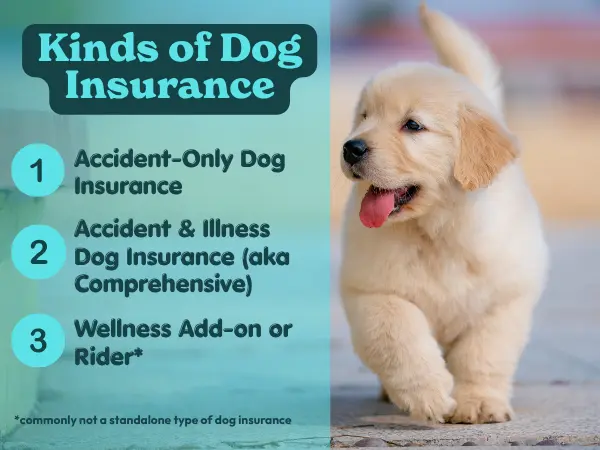
1. Accident-Only Dog Insurance
Accident-only dog insurance covers or reimburses a percentage of veterinary expenses related to accidental injuries, which can include fractures, foreign body ingestion, soft tissue injuries, bite wounds, toxin ingestion, car accidents, and so on. However, as the name suggests, this kind of dog insurance does not cover illnesses or disease-related veterinary expenses.
2. Accident & Illness Dog Insurance (Comprehensive Dog Insurance)
Accident-and-illness dog insurance, also known as comprehensive or standard pet insurance for dogs, covers or reimburses a percentage of veterinary expenses related to both accidental injuries and sickness. This type of dog insurance typically has a higher cost but also offers broader coverage than accident-only dog insurance.
3. Wellness or Routine Care Add-On
Wellness or routine care add-ons, also known as wellness riders, are an optional, paid feature for some dog insurance policies. While accident-and-illness veterinary expenses are reimbursed by fixed percentages, wellness benefits may reimburse eligible routine-care expenses up to scheduled or annual limits, depending on the provider.
Wellness add-ons typically have a fixed amount for wellness veterinary services like yearly exams, core dog vaccines, heartworm preventatives, and so on. While some pet parents find dog wellness add-ons useful for streamlining their budget, other pet parents opt instead for other ways to prepare for fixed yearly pet wellness costs.
C. How Much is Dog Insurance?
Dog insurance commonly costs $56 to $87 (Forbes.com), depending on the plan. This cost is affected by the following:
- Higher premiums for unlimited annual coverage vs. limited annual coverage.
- Higher premiums for certain dog breeds vs. mixed-breed dogs.
- Higher premiums for older dogs vs. younger dogs.
- Other factors: wellness add-on, chosen deductible, chosen reimbursement rate, and so on.
D. Is Pet Insurance The Only Way to Financially Prepare?
Short answer: no. There are various ways for pet parents to financially prepare for veterinary costs. Along with pet insurance, other ways pet parents can financially prepare include:
1. Credit or Financing for Vet Care
Payment plan services (e.g., Scratchpay) and healthcare credit cards (e.g., CareCredit) can allow eligible pet parents to pay a veterinary bill over time instead of paying the whole cost upfront. This can be especially helpful for large veterinary bills.
2. Savings for Your Dog or Fur Family
Setting aside money regularly can help create an emergency fund for unexpected veterinary bills, medications, and so on. This can be especially helpful for expenses not covered by insurance. Additionally, most insurance for dogs will require pet parents to pay the veterinary costs before reimbursement, highlighting the importance of having access to funds.
3. Pet Care Memberships
Veterinary memberships (typically provided by a veterinary clinics) provide discounts, bundles, or other similar benefits. One example of this is SplootPack™ membership (available in Colorado, Utah, & Illinois).
→ Get a pet care membership that you can use by itself or with insurance. With SplootPack™, pet parents can save more than $650 yearly on veterinary care at Sploot’s vet clinics in Denver, Colorado Springs, Salt Lake City, and Chicago! Get 3 FREE check-ups, 15% off dental care, 10% off all vet care services, exciting perks, and more. Learn more about SplootPack™ or call us for any questions!
4. Regular Preventive Care
While preventive veterinary care is not a financial tool on its own, it can help pet parents manage long-term costs. Regular wellness exams and screenings can help identify health concerns earlier, before they become more complex and potentially more costly to treat.

E. What is a Good Age to Start Dog Insurance?
So, when is the best time to get insurance? Should you start your dog’s insurance while they’re young? Here is a comparison of starting dog insurance earlier vs. later:
a. Dog Insurance Early: Puppies & Younger Dogs
Some pet parents look into insurance the moment that they adopt a puppy or a young dog. Starting your dog’s insurance early, at around 6 to 8 weeks old (depending on the lower limit accepted by your chosen insurance provider) can have the following advantages:
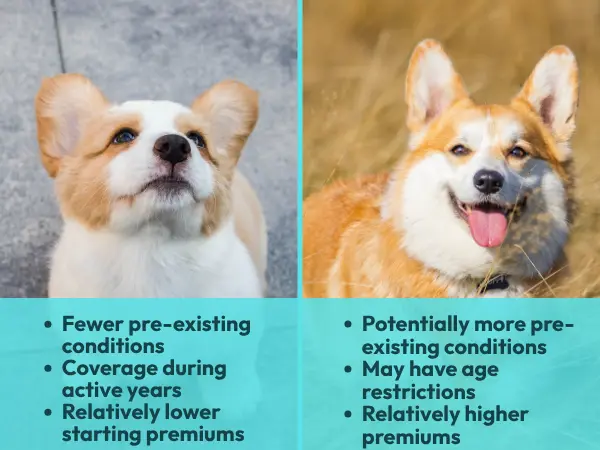
- Fewer pre-existing conditions excluded – Younger dogs may have fewer pre-existing conditions (e.g., allergies, diabetes, hip dysplasia). If these conditions develop or only show signs after both the enrollment and applicable waiting periods, they may be covered under the active policy’s terms.
- Coverage during a dog’s active years – While a dog is growing up, they are more active and potentially more prone to accidents and injuries. A percentage of the treatment cost can be covered by most kinds of dog insurance, including accident-only policies.
- Coverage for illnesses that puppies are more prone to – Puppies can be susceptible to various issues, including chronic diarrhea or vomiting, intestinal worms, ringworm, ear infections, and so on. With a comprehensive dog insurance policy, a percentage of the veterinary cost can be covered.
- Lower starting premiums – Most companies offer a lower starting premium for puppies and younger dogs.
b. Dog Insurance Later: Adult Dogs & Older
Some pet parents may prefer to financially prepare in other ways before starting dog insurance, depending on needs and priorities. In other cases, pet parents may adopt an older dog. Either way, it’s worth noting that starting pet insurance for dogs at a later age can lead to the following:
- Pre-existing conditions are likely to be excluded – as dogs age, they are more likely to develop certain conditions which can be excluded as a pre-existing condition in many pet insurance policies.
- Dog insurance premiums are higher for older dogs – since older dogs are more prone to various health issues, premiums generally increase as the dog ages.
- Some (but not all) providers have age restrictions – some insurance providers have an age limit of coverage and/or an age limit when a dog can be enrolled for pet insurance. It’s always worth checking in advance so that pet parents can plan accordingly.
F. Common Exclusions to Clarify
While dog insurance can come in handy for a wide range of accidents and illnesses, policies can exclude the following:
1. Routine Care or Wellness
Without a wellness add-on or rider, wellness or routine care services are generally excluded from standard dog insurance plans. These include yearly physical exams, routine dental care or dental cleanings, vaccines, heartworm preventatives, tick/flea preventatives, spaying/neutering, and so on.
2. Weight Loss Programs
Some dog insurance policies exclude weight loss programs or treatments directed solely at obesity. However, if the dog’s weight issues are tied to an underlying issue (e.g., Cushing’s disease, diabetes, hypothyroidism), these can be covered, as long as they are not excluded from the policy or treated as pre-existing conditions.
3. Pre-Existing Conditions: Are They Covered in Dog Insurance?
Most standard dog insurance plans exclude pre-existing conditions (NAIC.org), especially if they develop before enrollment or before the plan’s waiting period is over. These include incurable conditions like hip dysplasia, diabetes, allergies, arthritis, and the like.
Additionally, common, curable conditions can also be counted as a pre-existing condition if they surface before the waiting period for accident or illness claims ends; these include ear infections, fractures, wounds, respiratory infections, and the like.
4. Orthopedic & Bilateral Conditions
Some policies have special waiting periods or exclusions for orthopedic and bilateral conditions, which develop gradually and tend to affect both sides of the body. For example, if a dog has a cruciate ligament injury in one knee before enrollment, some insurers may exclude a later cruciate injury in the other knee. Other examples include hip dysplasia, elbow dysplasia, and patellar luxation.
5. Cases Seen as ‘Neglect’ or Opting Out of Recommended Care
Some dog insurance policies may exclude conditions linked to neglect or failure to follow recommended veterinary care. Examples can include:
- Certain vaccine-preventable illnesses in unvaccinated dogs (e.g., distemper, parvo in dogs, canine hepatitis, leptospirosis)
- Complications from untreated dog dental issues (e.g., periodontal disease)
- Health problems that worsen because the recommended treatment was declined or significantly delayed
→ Get discounts for primary care, urgent care, and dental care at Sploot’s vet clinics in Denver, Colorado Springs, Salt Lake City, and Chicago. SplootPack™ is a pet care membership that pays for itself, helping pet parents save more than $650 yearly, with 3 FREE check-ups, 15% off dental care, 10% off all vet care services, and more. Learn more about SplootPack™ or call us for any questions!
G. Dog Insurance Plan Specifications or Features
Aside from common exclusions, we recommend that pet parents look into the following before choosing a dog insurance plan.
1. Reimbursement Rate [The Percentage Covered]
Most dog insurance plans cover a percentage of eligible veterinary costs, also known as the reimbursement rate. With a higher reimbursement rate, a larger percentage of the veterinary bill will be reimbursed in case of accidents or illness, as per the policy’s terms. However, the premium will typically be higher as well.
2. Waiting Periods
A waiting period is the amount of time after your policy starts before certain coverage becomes active. If an illness or injury occurs during the waiting period, related expenses may not be covered, and the condition may be considered ‘pre-existing’. ‘
Waiting periods vary by type of claim (accident vs. illness vs. orthopedic) and by provider, with some having shorter waiting periods than others. Accidents and illnesses typically only have a waiting period of a few days or weeks. Meanwhile, some orthopedic conditions (e.g., hip dysplasia), if they’re covered by the plan, can have a waiting period of a few months.
3. Dog Insurance Deductibles
A deductible in dog insurance is the amount a pet parent is responsible for before insurance reimbursement applies. Most policies have annual deductibles, a set amount of eligible expenses for the year before the dog insurance starts reimbursing. For example, with a $500 annual deductible, you generally need to incur $500 in eligible expenses before the policy begins reimbursing covered costs.
While rare, some dog insurance policies use lifetime per-condition deductibles rather than annual deductibles, which means that there’s a set amount per condition before reimbursement begins. This typically doesn’t reset every year.
4. Annual Coverage Limit
If a dog insurance policy has an annual coverage limit, this means that it has a maximum amount it will pay out per year. After a pet parent has paid the deductible amount on eligible veterinary expenses, reimbursement starts, and reimbursement of the agreed percentage of covered costs will continue UNTIL the coverage limit for the year is met.
It’s worth noting that some plans offer unlimited annual coverage, which is worth looking into for pet parents who want broader coverage.
A Realistic Expectation of Dog Insurance for Financial Preparation
Dog insurance can provide valuable financial support when unexpected veterinary expenses arise, but it does not eliminate all out-of-pocket costs. Deductibles, reimbursement rates, coverage limits, and exclusions can all affect what pet parents pay out-of-pocket. This highlights the importance of doing thorough research before choosing a dog insurance policy.
Additionally, having savings or access to relevant financing can be helpful, especially since most dog insurance plans require pet parents to pay veterinary costs upfront before being reimbursed for the covered percentage.
Now that you know the basics from this article, here are additional sources of information as you choose the best dog insurance plan for you:
- Forums and customer reviews – it’s recommended to see what pet parents have to say regarding the coverage they got, the claims process, and their overall experience with insurance providers.
- Comparison websites for dog insurance – these websites can give you a side-by-side comparison of dog insurance plans from various providers.
- Your veterinarian and veterinary professionals – vets, nurses, and vet technicians do not just have their own personal experience with pet insurance, they may also have insights about the experience of other pet parents.
Sploot: All-in-One Care & Pet Parent Guidance
Whether you’re navigating pet insurance for dogs, have questions about preventative care, or looking for a full-service vet clinic, we’re here to help!
Sploot Veterinary Care offers all-in-one care, providing primary, urgent, and dental care under one woof™. We cover more than 95 percent of your dog’s lifetime needs. Plus, our veterinary team provides thorough care, informative guidance, and a Fear Free approach to make visits as comfortable as possible.
Visit one of our vet clinics in Denver metro, Colorado Springs, Chicago, and Salt Lake City, open 365 days a year with extended hours. Easily book an appointment online or through the Sploot Vets app today!
Pet Care Memberships: An Added Layer of Financial Support
Vet clinic memberships can be a great addition to pet insurance, offering extra perks and discounts on services, including some that insurance might not cover. While they’re not insurance themselves, they can help make vet care significantly more affordable.
We offer SplootPack™, a membership that can save you up to $650+ annually on essential vet care. While we always encourage pet parents to get pet insurance when possible, SplootPack™ gives you automatic savings at Sploot whether or not your pet is currently insured.
Get 3 FREE wellness exams or check-ups, 10% OFF on all Sploot’s services, and more exclusive discounts! Learn more about SplootPack™ today!