.webp)
Lab tests & diagnostics
Answers about their health, not guesswork.
From bloodwork and urinalysis to digital X-rays and ultrasound, Sploot's in-house lab returns most results the same day — so your vet can move from questions to answers to care, fast.


Why in-house diagnostics matter
Because waiting is the hardest part.
Most Sploot lab tests and X-rays are run right in the clinic, not shipped off and waited on. That changes what a diagnostic visit feels like — for you and your pet.
Same-day answers
Most bloodwork, urine tests, and X-ray results come back before the day is out — no week of wondering.
Less stress for your pet
One visit, one gentle sample collection. No repeat trips just to get a result explained.
Problems caught early
Kidney disease, diabetes, and thyroid changes show up in lab work long before your pet acts sick.
Treatment starts sooner
Fast results mean fast decisions — in urgent cases, that speed can genuinely save a life.
Which test does what
A pet parent's guide to the lab.
Your vet only recommends the tests your pet actually needs — and explains why. Here's what each one does, so the plan always makes sense to you too.

Bloodwork
The workhorse of vet medicine: blood counts plus a check on liver, kidneys, protein, and blood sugar.

Senior panel
Bloodwork plus thyroid testing and a fuller chemistry panel. Aging shows up in the blood before it shows up in behavior.

Fecal testing
A stool check for intestinal worms and protozoa like giardia, plus hidden blood when needed.

Urinalysis
Checks concentration, cells, crystals, protein, and glucose. A lot about kidney and urinary health lives in that little sample.

Heartworm & tick-borne
Screens for heartworm and the common tick-borne diseases before symptoms show.

Antibody titer tests
Measures your pet's existing immunity, so booster decisions rest on evidence, not just the calendar.

Bacterial cultures
For stubborn or recurring infections: finds the exact bacteria and which medication will clear it.

Skin & ear cytology
A look under the microscope at what's driving the itch, so treatment targets the actual culprit.
Imaging
When we need to see inside.
Sometimes the answer isn't in a sample — it's in a picture. Both of these happen right in the clinic, with images your vet reviews on the spot.

Digital X-ray
Detailed images of teeth, bones, joints, chest, and abdomen, ready for your vet to review on screen.

Ultrasound
Real-time imaging of the soft tissue X-rays can't show well: organs, bladder, heart, even pregnancy.

Point-of-care ultrasound*
A quick, focused scan during the visit to check internal organs and guide treatment right away.

Echocardiogram*
An advanced ultrasound of the heart that checks its structure and function.
In-house vs. reference lab
Two labs, one clear plan.
Some tests run right here in the clinic; others go to a specialized outside lab. Neither is "better" — they answer different questions, and your vet picks the right one for each test.This isn't just about preventing unwanted litters — though yes, that's huge. It also helps prevent serious health issues and can reduce certain behaviors like marking, roaming, and aggression.
Run in the clinic, while you're here.




Sent to a specialized outside laboratory.
Many workups use both. A same-day in-house screen guides what happens now; a reference panel fills in the full picture. Either way, your vet calls or messages you to walk through what the results mean.
What to expect
Your pet's lab visit, start to finish.
The exam comes first
Gentle sample collection
The lab gets to work
Results, explained
Puppies & kittens
Starting strong: early screenings.
A first round of lab work gives your newest family member a clean starting line — catching the parasites most young pets carry, screening for conditions that matter early, and setting the baseline every future test gets compared against.
.webp)
Senior pets (7+)
Older pets hide things. Lab work doesn't.
Cats and dogs are experts at masking how they feel — and aging changes like kidney disease and thyroid trouble often show up in a senior blood panel long before anything looks wrong at home.
Before a procedure
Pre-anesthetic bloodwork: the safety check.
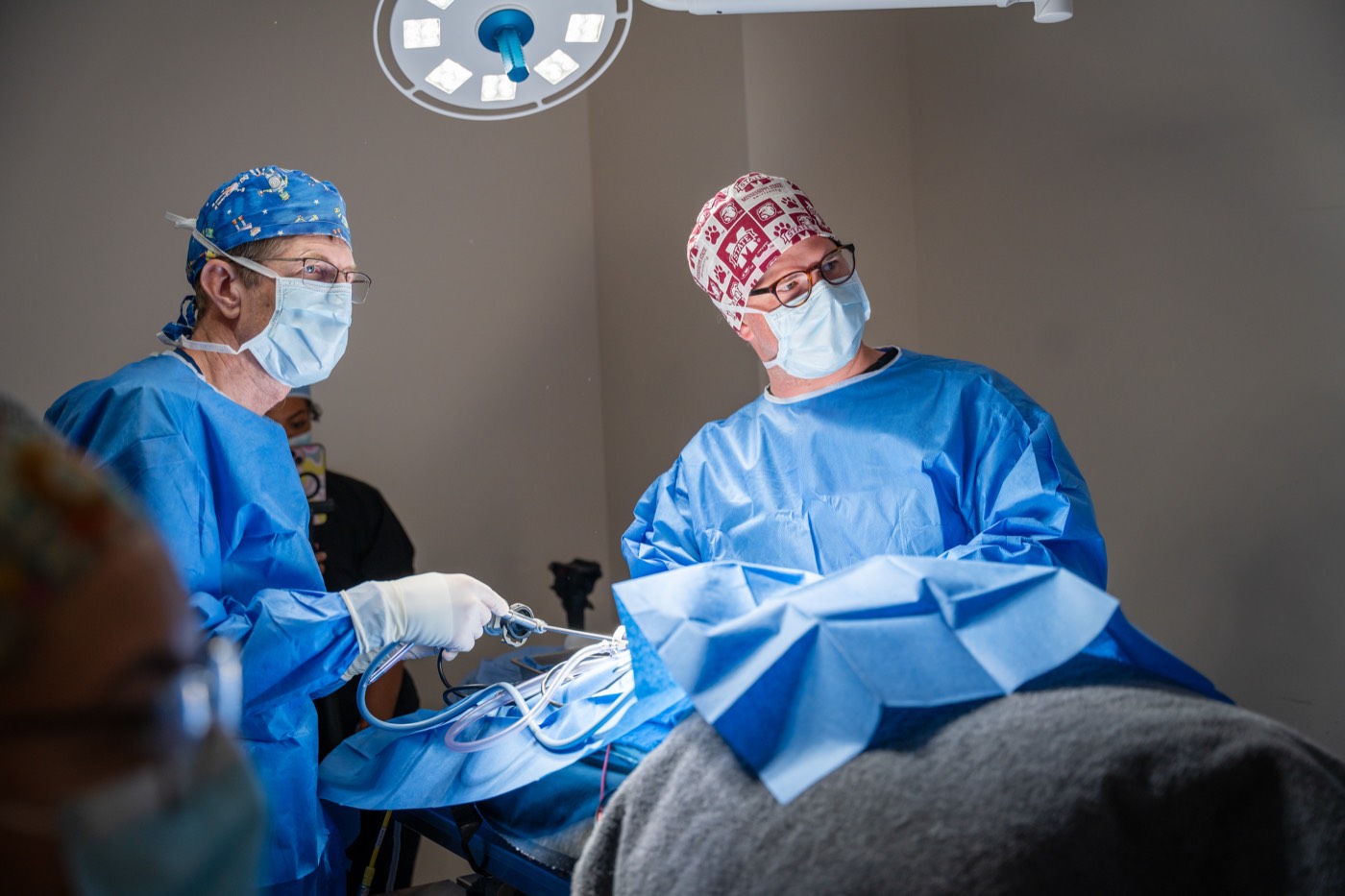
Before any procedure involving anesthesia — a spay or neuter, a dental cleaning, or a surgery — a quick blood panel confirms your pet can handle it safely and lets us tailor the anesthetic plan to them.
Run in-house, so results are back — and reviewed — before the procedure day.
DeepScan Diagnostics
See more. Know more.
When your pet's health mystery calls for answers, DeepScan dives past the surface. It's Sploot's advanced cfDNA diagnostic panel — a blood test with higher sensitivity than standard panels, enabling earlier detection of complex conditions like cancer, inflammation, and organ damage in dogs. Because the sooner we know, the sooner we can help.
SplootPack Membership
10% off every lab test & X-ray.
Diagnostics are where SplootPack quietly earns its keep — routine screens, senior panels, and the tests you didn't see coming all cost less.

Common questions
Pet lab tests, answered.
Because pets hide illness remarkably well. Routine bloodwork establishes a baseline for your pet's organ function and is the single best way to catch silent conditions — kidney disease, thyroid changes, early diabetes — while they're still easy to manage. It's the same reason we recommend a yearly wellness exam: prevention beats treatment.
For some panels, yes — a short fast (usually overnight, with water always okay) makes results like blood sugar and certain chemistry values more accurate. Not every test needs it, so we'll tell you exactly what to do when you book. When in doubt, ask us before the visit rather than skipping breakfast unnecessarily.
For stool: the fresher the better — ideally collected within a day of your visit, sealed in a clean bag or container, and kept cool. A piece about the size of a grape is plenty. For urine: a clean, dry container catch works for many tests, but don't stress if it's tricky — we can collect both at the clinic, and for tests that need a sterile urine sample we'll collect it there anyway.
Most X-rays and lab tests are processed in-house with same-day results — often while you're still at the clinic. Tests sent to our reference lab, like cultures and specialized panels, typically come back within a day or two. Either way, your vet reaches out to walk you through what the results mean.
Yes — a starter round of screening is one of the best gifts you can give a new pet. That usually means a fecal test (intestinal parasites are very common in young pets), a first CBC and chemistry panel as a lifelong baseline, heartworm antigen testing for puppies, and FeLV/FIV screening for kittens — which also tells us whether vaccination can still be used to protect them. Most of it folds right into their first wellness visits.
DeepScan is Sploot's advanced cfDNA diagnostic panel — a blood test with higher sensitivity than standard blood panels, enabling earlier detection of complex conditions like cancer, general inflammation, inflammatory diseases, and organ damage in dogs. Ask your vet whether it makes sense for your pup, or read more about how cfDNA testing works.
Routine bloodwork typically ranges from $80–$200 depending on the panel. You'll always get an upfront estimate before any test runs — no surprise line items — and SplootPack members get 10% off all diagnostics.
Usually not. Most pets handle both awake with gentle positioning and a calm, experienced team. If a pet is painful, anxious, or needs to hold very still for a precise image, a light sedative can keep the experience comfortable — we'll always discuss it with you first.
An X-ray is a still snapshot that's excellent for bones, joints, the chest, and spotting swallowed objects. An ultrasound is a live, moving image that shows the texture and inner structure of soft tissue — organs, the bladder, the heart. They complement each other, and it's common for an X-ray finding to lead to an ultrasound for a closer look.
Yes — members get 10% off bloodwork, urine and fecal testing, X-rays, and imaging, plus 3 free exam visits a year. If your pet is due for an annual screen or twice-yearly senior labs, the membership tends to pay for itself quickly.
Wondering what's going on? Let's find out.
Book at any of our vet clinics in Denver, Chicago, Colorado Springs, or Salt Lake City, open 8am to 8pm, every day of the year. Most lab results come back the same day.
Same-day & drop-off appointments · 365 days a year