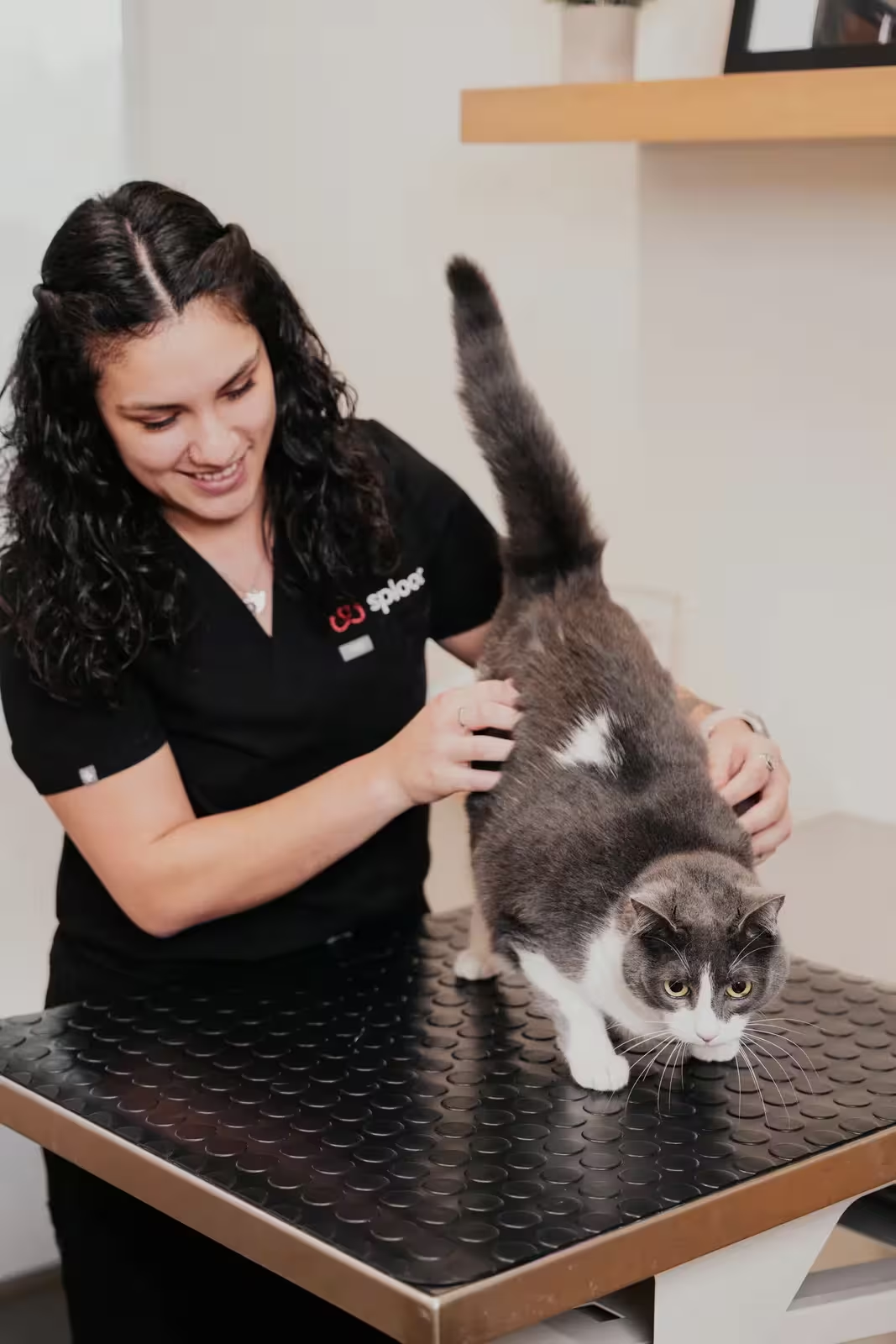
The cheapest vet visit is the one that never happens.
Year-round flea, tick, heartworm and intestinal parasite protection — prescribed by your vet, matched to your pet and where you live, then delivered to your door.

why it matters
Prevention is the whole strategy.
Stop disease before it starts
Parasites transmit infections that damage skin, heart, lungs and gut — nearly all of it is far easier to prevent than to treat.
Protect the whole household
Fleas, ticks and roundworms don't stop at your pet. Several of them are zoonotic, meaning they can infect people too.
Avoid the four-figure surprise
Treating heartworm disease commonly runs $1,000–$5,000. Preventing it costs a small fraction of that each month.
Indoor pets aren't exempt
Fleas ride in on shoes and pant legs. Mosquitoes come through screens. An indoor-only cat is lower risk, not no risk.
The four
What we're actually protecting against.

Itching, flea-allergy dermatitis, tapeworm and — in heavy infestations on small or young pets — anemia. In Colorado, fleas are also a plague and tularemia vector.

Carriers for anaplasmosis, ehrlichiosis and Rocky Mountain spotted fever. Lyme risk depends heavily on where you live — see the next section.

Progressive, potentially fatal heart and lung disease. There is
no approved heartworm treatment for cats — for them, prevention isn't the best option, it's the only one.

GI upset, weight loss and anemia. Roundworm and hookworm can infect people too, which is why we screen with a fecal test rather than guess.
Where you live
Risk isn't the same in Denver as it is in Chicago.
Most parasite advice is written for the whole country. Your pet doesn't live in the whole country.
Ticks
The Rocky Mountain wood tick is the common biter here, and it's most active in spring. Lyme disease is rare in Colorado — the blacklegged tick that carries it isn't established in the state, so most Lyme cases are picked up while travelling.
Fleas
Present year-round, and worth taking seriously near prairie-dog habitat, where fleas can carry plague and tularemia.
Heartworm
Historically low here, but rising — partly through dogs relocated from higher-prevalence states. Annual testing plus year-round prevention is the current recommendation.
Ticks
Genuine Lyme country. The blacklegged tick is established across Illinois, so tick coverage matters more here than it does on the Front Range — and product choice should reflect that.
Fleas
Humid summers and mild winters make for a long flea season, and indoor populations persist right through the cold months.
Heartworm
A long mosquito season means real, sustained heartworm pressure. Year-round prevention and annual testing are not optional here.
Ticks
Lower overall tick pressure than the Front Range, with exposure concentrated in canyon and foothill trails rather than in the valley.
Fleas
The dry climate suppresses outdoor flea populations, but indoor infestations behave the same way they do anywhere else once they start.
Heartworm
Lower prevalence, but mosquitoes are present and cases do occur. Year-round prevention with annual testing remains the recommendation.
How it works
Four steps. No guesswork.
Lifestyle & risk review
Testing
A matched recommendation
Delivered and refilled

Fleas and ticks turn up in a physical exam long before they turn up in a symptom. Your vet works through the coat, checks the skin, and looks in the places parasites actually hide — behind the ears, along the belly, between the toes.
That's also when we talk through where your pet goes and what they get into, which is what decides the product.
Side by side
What each one actually covers.
Brand names don't tell you much. Coverage does.
| Product | Fleas | Ticks | Heartworm | Round & hook | Whip & tape |
|---|---|---|---|---|---|
| Simparica Trio | ✓ | ✓ | ✓ | ✓ | — |
| NexGard Plus | ✓ | ✓ | ✓ | ✓ | — |
| NexGard | ✓ | ✓ | — | — | — |
| Bravecto | ✓ | ✓ | — | — | — |
| Heartgard Plus | — | — | ✓ | ✓ | — |
| Interceptor Plus | — | — | ✓ | ✓ | ✓ |
| Product | Fleas | Ticks | Heartworm | Round & hook | Also covers |
|---|---|---|---|---|---|
| Revolution Plus | ✓ | ✓ | ✓ | ✓ | Ear mites, tapeworm |
| Bravecto Plus | ✓ | ✓ | ✓ | ✓ | Lasts 2 months |
Timing
What's due, and how often.
Speeds healing and reduces inflammation and pain after spay and neuter surgery.
Speeds healing and reduces inflammation and pain after spay and neuter surgery.
Speeds healing and reduces inflammation and pain after spay and neuter surgery.
Speeds healing and reduces inflammation and pain after spay and neuter surgery.
Speeds healing and reduces inflammation and pain after spay and neuter surgery.
“Do I really need it in winter?” Yes. Fleas overwinter indoors, ticks are active on any day above freezing, and a lapse in heartworm prevention restarts the clock. The Sploot app sends a reminder when each one is due.
Optional upgrades that make surgery gentler and recovery faster. Ask about any of these during your consultation.
Cost
Prevention costs less. By a lot.
Per month, to prevent
A typical monthly preventive, depending on your pet's weight and which parasites it needs to cover.
To treat heartworm disease
Months of treatment and strict exercise restriction — and for cats, there's no approved treatment at all.
SplootPack Membership
10% off every preventative.
Prevention is a recurring cost, so a recurring discount is where membership actually shows up. SplootPack takes 10% off preventatives and everything else — in clinic and on SplootRx.

*Subject to credit approval. See carecredit.com for details. See our full financing options.

Refills
Already on prevention? Skip the visit.
Select your clinic
Order or refill
Delivered to your door
Simparica Trio
than the same product at Chewy
Revolution Plus
than the same product at Chewy
Fulfilment
sourced from licensed manufacturers
Straight answer
The things we get asked every day.

Fleas and mosquitoes still get in — on shoes, on other pets, through a window screen. And because there's no approved heartworm treatment for cats, prevention is the only protection a cat gets.

Fleas overwinter happily indoors, ticks are active on any day above freezing, and skipping months of heartworm prevention restarts your pet's exposure window.

Over-the-counter products aren't held to the same testing standard, and some are simply ineffective. A few are actively unsafe — permethrin-based products, in particular, can be fatal to cats.

No — this can kill a cat. Several common canine flea and tick products are toxic to cats even in small amounts. Never split, share or substitute between species.
Common questions
Parasite prevention, answered.
Yes, in all of our markets. Fleas survive the winter indoors, ticks become active on any day above freezing, and heartworm prevention works retroactively — each dose clears the larvae your pet picked up over the previous month, so a skipped month leaves a real gap. Year-round dosing also means one habit instead of a seasonal start-and-stop you have to remember.
There isn't a single best one — there's a best one for your pet. For dogs, a combination product like Simparica Trio or NexGard Plus covers fleas, ticks, heartworm and common intestinal worms in one monthly chew, which is why it's a frequent starting point. For cats, Revolution Plus and Bravecto Plus are the common choices, both topical. Weight, age, health history, other pets in the home and your local tick pressure all move the answer, which is why it's a prescription conversation rather than a shelf pick.
Lower risk isn't no risk. Fleas arrive on shoes, on clothing and on other pets; mosquitoes come through door and window screens. The heartworm point is the decisive one — there is no approved treatment for heartworm disease in cats, so if an indoor cat is infected, there's nothing to fall back on. Most vets, including ours, recommend prevention for indoor cats for exactly that reason.
No. Heartworm preventives are prescription-only in the US, and a prescription requires a current vet-client-patient relationship plus a recent negative heartworm test. That test isn't bureaucratic: giving a preventive to a dog that already has adult heartworms can trigger a dangerous reaction. If you're already a Sploot client and just need a refill, you usually don't need a new appointment — order through SplootRx and your vet approves it directly.
Two reasons. Safety: preventives kill larvae, not adult worms, and using one in an already-infected dog can cause a serious reaction. And detection: heartworm disease is silent early on, so an annual test is the only way to catch it while it's still straightforward to treat. The test is a small blood sample and we run it in-house.
It depends on your pet's weight and which parasites the product needs to cover — a monthly preventive commonly lands somewhere in the $6–18 range. Current pricing for each product is on SplootRx, and SplootPack members take 10% off. For scale: treating heartworm disease typically runs $1,000–$5,000, which is the comparison that matters most.
Prescription preventives have a strong safety record when they're matched to the right pet at the right dose. Mild, short-lived effects can happen — some digestive upset, or irritation at the application site with topicals. Contact us if you see persistent vomiting, lethargy, incoordination or any reaction that doesn't settle within a day. Tell your vet about every medication and supplement your pet takes, and about any seizure history, since that can affect product choice.
Give it as soon as you remember, then resume the normal schedule. If more than a few weeks have lapsed on heartworm prevention, call us — depending on how long the gap was, we may want to re-test before restarting, since prevention doesn't clear an established infection.
No, and this one is genuinely dangerous. Several common canine flea and tick products contain permethrin, which is toxic to cats — exposure can be fatal, including from a cat grooming a recently treated dog. Never split a dose, never substitute between species, and if you have both, keep them separated until a topical has fully dried.
Order through SplootRx: choose your clinic, place the refill, and your vet approves it directly — most refills don't need another visit. Autoship is available on eligible items, saves 5% or more, and can be paused, changed or cancelled any time. Orders are fulfilled by Vetsource, our licensed veterinary pharmacy partner.
SplootPack takes 10% off preventatives, in clinic and on SplootRx, along with 3 free exams a year and 10% off everything else. It doesn't include the preventatives themselves at no cost — it's a membership, not insurance. Since prevention is a recurring cost, the 10% compounds over a year.
Yes. An active infestation is a treatment problem, not a prevention one: it needs a product that kills what's already there, usually alongside treating the home environment, and sometimes testing for tick-borne disease. Book an urgent care or sick visit rather than starting a preventive on your own — then we'll move you onto year-round prevention once it's resolved.
Get ahead of it.
Book at any of our clinics in Denver, Chicago, Colorado Springs, or Salt Lake City — open 8 am to 8 pm, every day of the year.
Same-day appointments most days · 365 days a year