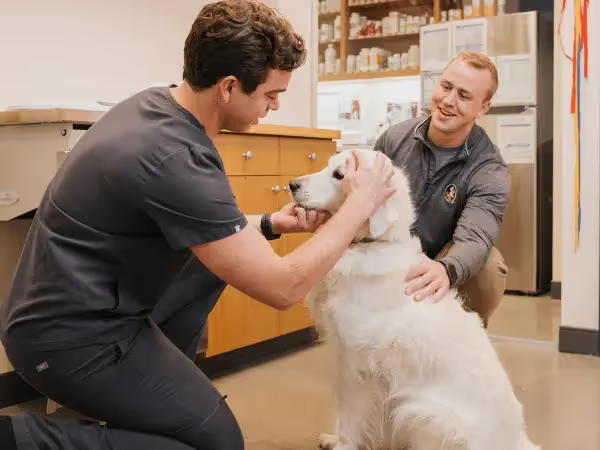


Dog ear infections often show symptoms like repeated ear scratching, head shaking, ear inflammation, ear discharge, and more. If your dog has any of these symptoms, they may need a check-up and prompt dog ear infection treatment.
However, dog ear infections can be caused by bacteria, fungi, and ear mites—and it’s crucial to provide dog ear infection treatment that targets the specific cause. In this Sploot Vets guide, we talk about how to treat dog ear infections and provide answers to common questions about dog ear infection treatments.
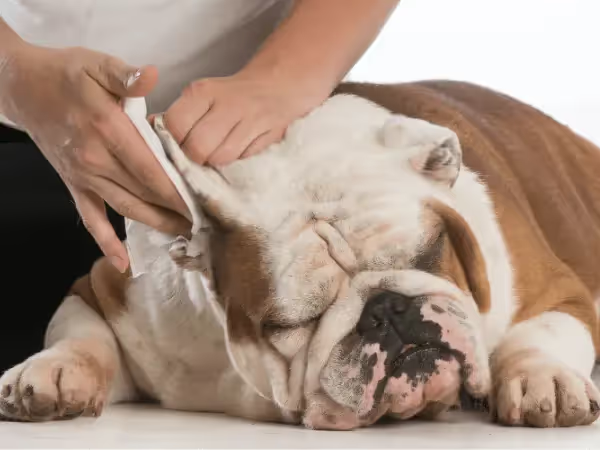
Dog Ear Infection: Definition & Symptoms
A dog ear infection occurs when the skin barrier is broken down, and opportunistic bacteria, and/or fungi take the opportunity to grow in the ear, resulting in inflammation, discharge, and other related symptoms. Dog ear infections typically affect the external ear, but ear infections can also spread to the middle and inner ear.
It is vital to address the underlying cause to prevent the ear infections from recurring.
Treatment for dog ear infection can vary depending on 1) what is causing the ear infection and 2) how far the ear infection has spread. It is always best to see a vet as soon as possible if you observe the early warning signs of a dog ear infection.
Early Symptoms of Dog Ear Infection
If you notice the following symptoms, the ear infection may have just started forming. It would be best to schedule a veterinary appointment promptly.
- Mild but repeated ear scratching
- Occasional head shaking
- Redness or mild inflammation in the ear
- Mild odor (not very strong)
- Small amount of wax or discharge
Later Symptoms of Dog Ear Infections
If a dog’s ear infection is not treated promptly, symptoms can worsen. If you notice the following, it would be best to take your dog to a same-day veterinary care provider for a prompt evaluation and treatment:
- Frequent or intense head shaking
- Constant scratching, possibly causing wounds
- Strong, foul odor from the ear
- Noticeable discharge (yellow, brown, or black)
- Swelling or thickening of the ear canal
- Pain when the ear is touched
- Loss of balance (in severe cases)
Note: Without treatment, ear infections in dogs can continue to worsen, potentially causing damage to the dog’s hearing or facial paralysis in severe cases.
→ At Sploot Vets, our clinics are open 365 days a year, with extended hours. We provide in-house veterinary diagnostics and a thorough treatment for dog ear infections and other health issues. We also offer drop-off urgent care—especially helpful for busy pet parents. Check out our vet clinics in Denver, Colorado Springs, Chicago, and Salt Lake City.
What Causes Dog Ear Infection? [Common Causes]
1. Bacterial Dog Ear Infections
Bacterial dog ear infections are most commonly caused by Staphylococcus, Streptococcus, and Pseudomonas species. While some bacteria can come from water or the soil, they can also be an overgrowth of ‘skin flora’ when conditions are just right for overgrowth (i.e., trapped moisture). Many cases of swimmer’s ear in dogs are bacterial infections. This is why we encourage post–swimming care for dogs.
Note: Bacterial dog ear infections typically produce a pungent or foul-smelling ear discharge, along with other inflammatory symptoms.
2. Fungal or Yeast Dog Ear Infections
Fungal dog ear infections are typically caused by ‘Malassezia pachydermatis’. This is a type of yeast that is present in the dog’s own ‘skin flora.’ However, similar to bacteria, Malassezia yeast can overgrow in certain conditions.
Note: A yeast infection in a dog’s ear typically produces a musty or corn-chip-smelling ear discharge, along with other symptoms related to inflammation.
3. Ear Mites in Dogs
Ear mites in dogs (or ‘ Otodectes cynotis’) are microscopic parasites that live in the dog’s ear canals. Unlike yeast and some bacteria that cause ear infections in dogs, ear mites are NOT a part of the skin’s flora. Dogs can get ear mites from other infected dogs or from contaminated surfaces. Ear mites can survive for a few days on bedding, blankets, and other shared surfaces.
Sploot veterinarian Dr. Courtney Parker clarifies the following: “Ear mites do not directly cause the infection, rather they lead to the dog scratching excessively at their ears, breaking down the skin barrier and allowing yeast and bacteria to colonize. In these cases, the ear mite infection must also be treated in order to fully address the bacterial/yeast ear infection.”
Dog Ear Infection Treatment at a Vet Clinic: What to Expect
Dog ear infections can affect different parts of the dog’s ear. Typically, however, ear infections start from the outer ear, which is the most exposed to the outside. However, these infections can also spread further inwards.
Depending on which parts of the ear are infected, there are different treatment approaches. Infections involving the outer ear are the easiest to treat, highlighting the importance of prompt dog ear infection treatment to avoid spreading.
1. Dog Ear Infection Treatment - Outer Ear
Treatment may need an ear lavage, which not only helps the vet see the ear more clearly but also clears the area so that topical medications can be distributed more effectively.
Outer dog ear infections can be treated topically or orally, depending on the cause/s of the infection.
- Bacterial ear infections can be addressed with oral or topical medications.
- Ear infections caused by fungi (yeast) and ear mites are typically treated topically.
Note: After the vet visit, the veterinarian may provide instructions for at-home care, using the prescribed topical ear drops or oral antibiotics. Your vet may also suggest a date for a follow-up checkup.
2. Dog Ear Infection Treatment - Middle Ear
Dog ear infection treatment for the middle ear (just behind the eardrum) is slightly more complicated. These ear infections tend to be more painful and swollen. If an ear lavage is too painful, dogs may need to be sedated first.
Next, the middle ear infection is treated, which varies depending on the cause:
- Bacterial and fungal (yeast) infections, the most common types of middle ear infections in dogs, are treated with oral medication.
- In some rare cases, ear mites can also migrate to the middle ear; these are treated with antiparasitic oral/injectable medications (e.g., ivermectin) or transdermal antiparasitic medications (e.g,. Selamectin)
In addition, vets may also prescribe medications to help manage the inflammation and pain associated with middle ear infections in dogs.
Note: After the vet visit, your vet will instruct you on administering any needed oral medications and provide a date for your dog’s follow-up appointment. Diligent at-home care is highly recommended since chronic or severe middle ear infections may require surgery.
3. Dog Ear Infection Treatment - Inner Ear
Inner dog ear infections are typically NOT given an ear lavage. In addition, the treatment is similar to that of middle ear infections.
- For bacterial or fungal infections, oral antibiotics and antifungal medication are given.
- Ear mites rarely spread to the inner ear; however, when they do, the infection is treated with systemic medications, administered either orally, via injection, or transdermally.
Inner ear infections in dogs may also benefit from anti-inflammatory medication and painkillers, similar to middle ear infection treatment. One key difference is that inner ear infections in dogs can affect balance and may thus require antiemetics to control nausea.
Note: After the vet visit, your vet will provide instructions on administering medications and recommend a date for your dog’s follow-up appointment. Diligent at-home care is critical, especially since severe inner ear infections may require surgery as a last resort.
4. [As Needed] Allergy Management
Recurring ear infections could be a sign of underlying allergies in dogs. Canine allergies, whether from food, seasonal causes (e.g. spring allergies, fall allergies) can trigger their bodies to produce excess earwax, which also increases the chances of developing dog ear infections. This is why allergy management may be recommended alongside your dog’s ear infection treatment.
→ Get your dog’s ear infection treated at Sploot Vets today! With our experienced medical team and in-house diagnostics, we offer a thorough treatment for dog ear infections. Book an appointment at one of our vet clinics in Denver, Colorado Springs, Chicago, and Salt Lake City.

Can a Dog’s Ear Infection Heal Itself?
In most cases, dog ear infections do NOT resolve on their own. This is why it’s important to seek dog ear infection treatment as soon as you suspect that your dog has an ear infection.
What Happens If You Ignore a Dog’s Ear Infection?
If you ignore a dog’s ear infection, it can lead to complications such as the following:
- Continued pain & discomfort– without dog ear infection treatment, dogs will keep on experiencing pain, itching, and/or discomfort from the infection, which can affect their sleep and quality of life.
- Dog ear infection spreading – if not treated, an outer ear infection can spread inwards towards the more sensitive areas of the middle and inner ear (located behind the eardrum). Topical treatments alone would NOT be enough in such cases. Surgery may eventually be needed if middle or inner ear infections become chronic or severe.
- Ear hematomas in dogs – repeated head shaking or scratching can rupture blood vessels in the ear flap, causing a painful swelling called a hematoma. This often requires surgery to drain the blood.
- Hearing loss – persistent or severe infections can damage the structures of the ear, potentially leading to partial or permanent hearing loss.
- Facial paralysis – if ear infections spread to the middle or inner ear, it can lead to facial paralysis in dogs because facial nerves run close to these areas.

Can You Treat a Dog’s Ear Infection Without a Vet?
It is NOT advisable to treat a dog’s ear infection without a veterinarian’s guidance. A thorough diagnosis and assessment of a dog's ear infection is the first step to proper dog ear infection treatment.
In addition, Sploot veterinarian, Dr. Ashley Yao reminds pet parents: “It is NOT recommended to clean the dog’s ears at home with saline or water, as it can introduce excess moisture into the ear. It's also helpful to note the name of any over-the-counter ear cleaners used prior to the vet visit, as these products can vary widely in their ingredients.”
By seeking veterinary guidance promptly, pet parents can avoid the following:
1. Misuse of Antibiotics & Infection Complications
Dog ear infections can be caused by bacteria, fungi (yeast), and ear mites. In addition, an infection can lead to a secondary infection, meaning there may be two pathogens involved (e.g., yeast and bacteria).
Attempting a trial-and-error approach to dog ear infection treatment can lead to antibiotic misuse, which can:
- Create resistance in some bacteria, making the infection harder to treat.
- Cause a faster spread of fungal ear infections by accidentally eliminating normal flora
- Delay treatment for ear mites since they are not responsive to misused antibiotics or antifungal medication.
2. Dangerous Medications for Perforated Eardrums in Dogs
During a checkup for dog ear infections, vets assess whether or not the eardrum is perforated, which is an important part of determining the safest medication to use.
Eardrum perforation can happen due to infection. An intact eardrum shields the middle ear from medications. Therefore, having a perforated eardrum rules out certain topical medications with ototoxic ingredients (e.g., gentamicin, neomycin, or alcohol), which are not safe for the middle ear and beyond.
Using the wrong medication with a perforated eardrum can lead to:
- Permanent hearing loss – due to damage to the middle or inner ear structures
- Balance issues – due to damage to the inner ear, which plays a part in balance
Get All-in-One Veterinary Care at Sploot Vets
Do you have further questions about dog ear infection treatment? Sploot Vets is here for you.
Sploot Veterinary Care offers all-in-one veterinary care for your dog—with primary care, urgent care, and emergency vet services all under one roof. With Fear Free techniques and availability 365 days a year, we provide stress-free vet visits for both pets and pet parents!
Schedule an appointment easily online or through the Sploot Vets App.
Be Extra Prepared for Pet Emergencies & Boost Your Pet’s Health with SplootPack™
Save hundreds on vet care, plus get added peace of mind for your pet’s illnesses & emergencies. The SplootPack™ membership helps you save up to $600+ on essential veterinary care.
This membership offers benefits for not only health-boosting preventive care but also life-saving urgent care and emergency vet services at Sploot!
Get 3 waived wellness exams or check-ups, 10% OFF on all Sploot’s services, $150 credit toward preventative procedures, and more!
- Learn more - SplootPack™ Denver & Colorado Springs →
- Learn more - SplootPack™ Chicago →