Bringing home a new puppy comes with plenty of excitement and usually a few questions. When should you schedule that first vet visit? What should you bring? What actually happens during the appointment?
If you’re feeling unsure about your puppy’s first vet visit, you’re not alone. We’re here to make the process simple and hassle-free. From what to expect during the exam to a practical puppy first vet visit checklist, this Sploot Vets guide covers what you need to know.
When to Schedule Your Puppy’s First Exam & Why
Before or right after bringing a new puppy home, schedule a puppy exam. Generally, the sooner you bring them to a vet, the better. By scheduling a prompt new puppy vet visit, you will be able to:
- Get your puppy started on essential dog vaccines to protect them from common, transmissible illnesses.
- Allow veterinarians to spot and address any health or developmental issues early.
- Get personalized puppy care tips for your puppy's needs.
What to Bring to Your Puppy’s First Vet Visit
Walking into your puppy’s first vet visit is much easier when you know exactly what to bring. Here’s a simple checklist to help you prepare.
1. Adoption or Breeder Paperwork
Bring any documents you received from the shelter, rescue, or breeder. These records often include helpful details about your puppy’s background, such as date of birth, breed information, microchip registration, and early health notes. Even if the information seems basic, it can help your vet understand your puppy’s starting point.
2. Any Vaccination or Medical Records
If your puppy has already seen a veterinarian or received early vaccines, bring those records with you. This prevents duplicate treatments and allows the care team to build an accurate vaccine and wellness schedule. Even partial records can be helpful.
3. A Leash, Collar, and Secure Carrier or Crate
Safe transport is especially important for young puppies who are still adjusting to new environments. If your puppy is small enough, a crate or carrier can be a helpful way to safely transport them, particularly if they are not yet comfortable walking on a leash. A secure carrier can also help protect small puppies from interactions with other animals in the lobby and prevent them from running off if they become frightened in a new environment.
Note: While your puppy is inside the crate, do NOT attach their leash as this can lead to accidents. Once you and your puppy are in a calm, private exam room, you can take your puppy out of their crate and attach their leash.
4. A Small Treat and Favorite Toy
Familiar items can help your puppy feel more at ease during the visit, especially if everything feels new and unfamiliar. Bringing a favorite toy or a few small puppy treats gives your puppy something comforting to focus on and can help make the overall experience feel more positive.
5. A Stool Sample
Veterinarians may recommend a stool test to check for common intestinal parasites in dogs, which are fairly common in young puppies. If requested, bring a fresh sample collected the same day in a sealed bag or container.
6. Your Puppy’s Insurance Info
If your puppy is covered by pet health insurance, bring your policy details with you. Having this information available helps your care team keep documentation accurate and makes the claims process smoother. It’s a simple step that can help prevent delays later on.
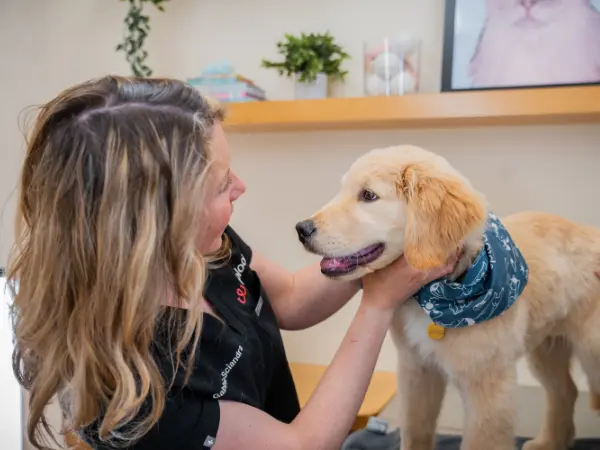
Questions to Ask the Vet About Your New Puppy
Your first puppy vet visit isn’t just about exams and vaccines. It’s a chance to get clear, reliable guidance on everything from nutrition to behavior. If you’re not sure what to ask during your new puppy’s first vet visit, here are some key questions to ask:
1. What's the Recommended Puppy Vaccine Schedule?
Puppy vaccinations follow a structured timeline designed to protect against common, highly contagious diseases during early development. While exact timing can vary based on your puppy’s age, lifestyle, and health history, most schedules follow a similar framework.
A typical puppy vaccine schedule often looks like this:
- Around 8 weeks old: First core vaccine, DHPP or DAPP (protects against distemper, adenovirus, parvovirus, and parainfluenza). | Every 2–4 weeks after: Booster doses of the DHPP or DAPP vaccine (3–4 shots).
- Around 12–16 weeks old: Final dose of DHPP booster + first doses of core vaccines for rabies and leptospirosis. | Every 2–4 weeks after: leptospirosis booster (2 shots)
- 1 year after: Booster of all puppy vaccines
Note: The vaccine schedule for non-core vaccines (e.g., Bordetella, Lyme, canine Influenza) is given based on lifestyle and risk factors. The recommended vaccine schedule may also be spread out depending on the patient’s weight or any history of vaccine reactions.
2. How Often Should I Bring My Puppy to the Vet?
Most puppies should see the vet every 3–4 weeks from around 8 weeks old to 16 weeks old. These appointments allow Sploot’s veterinary team to administer booster vaccines, check growth and weight, screen for common concerns, and address new questions as your puppy grows.
After the initial vaccine series is complete, there is typically another recommended vet visit at around 7 months old for a heartworm test and to discuss a plan for spaying or neutering your pet.
After the above vet appointments and procedures are done, vet visit frequency usually decreases. Puppies transition into routine wellness care, which commonly includes annual wellness exams unless new concerns arise.
3. When Should I Spay or Neuter My Puppy?
Spaying and neutering offer various health and behavioral benefits. Typically, puppies can be spayed or neutered at around 6 to 9 months of age. However, the best time to spay or neuter your puppy can vary depending on breed, size, behavior, overall health, and environmental factors. By asking this question during your puppy’s first vet visit, you can get more personalized recommendations and be able to plan ahead.
4. What Should I Feed My Puppy and How Often?
Puppy nutrition can feel surprisingly complicated, especially with so many dog food brands available. Asking this question helps you build a feeding routine that matches your puppy’s age, size, and breed. You’ll gain clarity on healthy portion sizes, how to safely change diets, and how to choose the best puppy food for your puppy’s needs.
Many puppies thrive on regular AAFCO puppy food from a reputable brand. However, some puppies may need breed- or size-specific food, puppy food for sensitive stomachs, and other special formulas.
.webp)
5. What Are Normal Puppy Behaviors vs Red Flags?
Puppies do a lot of strange things, especially in those early months. Asking about concerning or confusing behaviors helps you understand what’s normal, what’s temporary, and when something may be worth a closer look. This question alone can ease a lot of first-time puppy parent anxiety.
6. How Do I Handle Potty Training and Socialization?
Potty training and puppy socialization are topics nearly every new puppy parent has questions about. The general rule of thumb is to start early, at around 8 to 12 weeks of age. Most veterinarians will also recommend positive reinforcement as the most effective and safest training method.
Note: For more information, check out our vet-approved guides on puppy socialization and puppy potty training tips.
How to Prepare for a New Puppy Vet Visit
A little preparation can make a big difference in how your puppy experiences their first vet visit. Small, simple steps at home can help reduce stress, build confidence, and set the tone for future appointments. Here’s how to help your puppy feel more comfortable before the big day.
1. Schedule the Visit Promptly
A prompt puppy exam (within a few days of your puppy’s arrival) helps establish a clear baseline for your puppy’s health. This is when veterinarians can check for common concerns, review existing medical records, and map out vaccines, preventive care, and wellness milestones. Starting care early allows small issues to be addressed before they worsen.
2. Let Your Puppy Adjust to Their Carrier or Leash
If your puppy isn’t used to a leash, collar, or carrier yet, a little low-pressure practice can help reduce stress. Short, positive exposures at home can make the trip to the clinic feel far less overwhelming for your puppy. The goal isn’t perfect behavior, just familiarity and comfort with the leash and crate.
3. Avoid Overfeeding Right Before the Appointment
A full stomach can increase the chances of car sickness or accidents, especially for young puppies. Keeping meals light before travel helps keep your puppy more comfortable during the trip and makes treats more effective for reassurance and positive reinforcement during the visit.
4. Take a Walk Beforehand
A bit of light activity before the appointment can help your puppy burn excess energy. Even a short play session in the yard can make it easier for your puppy feel more relaxed during the exam. It also gives your puppy a last chance to go to the bathroom, reducing the risk of accidents during the appointment.
5. Know That It’s Okay If They’re Nervous
Many puppies feel unsure in new environments, and that’s completely normal. Our vet clinics at Sploot are designed for calm, Fear Free vet visits, with gentle handling and a supportive care team focused on helping your puppy feel safe and comfortable.
What to Expect During Your Puppy’s First Appointment
A puppy’s first vet visit is meant to be thorough, but many pet parents are pleasantly surprised by how smooth and relaxed the experience can be, especially in Fear Free vet clinics like Sploot. Here’s what usually happens during a puppy’s first vet visit.
.webp)
1. Full Physical Exam for Puppies
Your puppy’s first appointment typically begins with a nose-to-tail physical exam. The veterinarian will gently evaluate your puppy’s eyes, ears, teeth, skin, coat, joints, weight, and overall body condition. While this may sound like a lot, the exam itself is calm, low-stress, and designed to give you a clear picture of your puppy’s health.
This visit also allows your team to spot subtle concerns that may not be obvious at home. Minor ear irritation, early skin sensitivities, developmental observations, or other small changes are often easiest to address when identified early.
2. First Vaccines and Parasite Prevention
For most puppies, the first visit also includes early vaccinations and parasite prevention. These preventive treatments help protect your puppy from common illnesses while supporting long-term health. Veterinarians will explain which vaccines are recommended, what they protect against, and what to expect moving forward.
Parasite screening and treatment are often addressed as well. Intestinal parasites are fairly common in young puppies, even when they appear perfectly healthy. Identifying and treating these concerns early helps keep your puppy healthy and happy.
3. Ongoing Care Planning and Next Steps
Before the appointment wraps up, the veterinary team works with you to map out what comes next. This is where you gain a clear view of upcoming pet wellness exams, booster vaccines, and any needed follow-up appointments..
This portion of your puppy’s first vet visit is also a great opportunity to ask questions about potty training, spay or neuter scheduling, common behaviour concerns, and nutrition recommendations.
How Sploot Vets Supports New Puppy Parents
Many pet parents encounter moments of uncertainty as their pup grows—whether it’s due to a sudden symptom, a minor injury, or something that just doesn’t feel quite right. Quick access to veterinary guidance can make a major difference in such situations.
At Sploot, we provide support at every step—from routine vet visits to same-day urgent care concerns. Here’s what we offer:
Puppy Vaccines and Wellness Exams
Sploot’s comprehensive veterinary services for puppies help pet parents create a strong foundation for preventative care. We offer comprehensive puppy wellness exams and vaccinations, supporting your fur baby’s early development. Our puppy exams also include parasite screenings and in-house veterinary diagnostics when needed, allowing our team to identify potential concerns and keep your puppy on track for a healthy first year.
Benefits of the SplootPack™ Membership
The SplootPack™ membership gives you added flexibility and savings that pair naturally with your puppy’s ongoing care. Members receive three standard exams per year, which can be used for wellness exams, sick visits, or urgent care concerns.
Our pet care membership also includes exclusive discounts on veterinary services, along with credits that can be applied toward care like spay or neuter procedures and dental treatments.
Same-Day Visits, Extended Hours, and Tele-Triage
With same-day visits, extended clinic hours, and daily appointment availability, getting your puppy seen is as convenient as possible. Whether you’re dealing with a sudden concern or something that just doesn’t feel quite right, care is easier to access without long waits or complicated scheduling.
For questions that may not require an in-clinic visit, Sploot’s tele-triage hotline allows you to connect with our veterinary team for quick answers when it matters most.
.webp)
Schedule Your Puppy’s First Visit at Sploot Vets Today
Your puppy’s first vet visit sets the foundation for their long-term health. Early, preventive care helps identify concerns, build a wellness plan, and give you the clarity every new pet parent needs.
Sploot Vets offers all-in-one care, modern vet clinics, and flexible scheduling, designed to make your puppy’s first vet visit (and every visit after) easy to navigate. We also offer Fear Free care, prioritizing your puppy’s comfort at every step.
With clinics in Denver, Chicago, and Colorado Springs, getting started with proactive puppy care is simple and convenient. Schedule your puppy’s first visit at Sploot Vets today!