

Thinking about getting pet insurance for your cat? Cat insurance can help by covering a percentage of veterinary costs in case of unforeseen accidents and illnesses. However, choosing the best cat insurance requires looking closely at policy features, like exclusions, deductibles, coverage limits, and more.
Some pet parents may also be wondering, “Is cat insurance even worth it if I have an indoor cat?” In this beginner-friendly Sploot Vets guide, we will take a closer look at cat health insurance, the value it brings, and how to weigh different policy features to help you find the best one for your feline companion.
A. What Is Insurance for Cats & Who Needs It?
Cat insurance, also known as cat health insurance, covers a percentage of eligible veterinary costs from unexpected accidents or illnesses, depending on the kind of cat insurance you choose.
Cat insurance is advisable for pet parents who are looking for added financial protection in case of injuries and health issues. Both outdoor cats and indoor cats can be protected by insurance, even though they have different lifestyle risks.
B. Types of Cat Insurance to Choose From
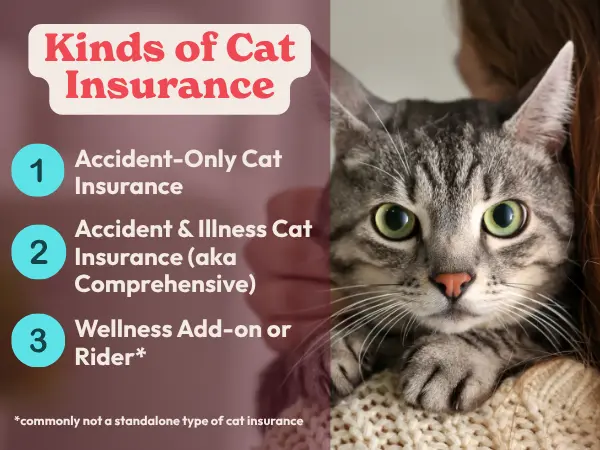
There are two main types of cat insurance, based on the scope of coverage (NAPHIA.org). Here are the main types of cat health insurance to choose from:
1. Accident-Only Cat Insurance
Accident-only cat insurance is a type of pet insurance that covers a percentage of veterinary care costs related to injuries or health issues arising from accidents. These can include fractures, sprains, or soft tissue injuries, fall injuries, cuts and bite wounds, toxin ingestion, foreign body ingestion, burns, and the like. As the name suggests, accident-only cat insurance does not cover costs related to illnesses or infections.
2. Accident & Illness Cat Insurance (Comprehensive Cat Insurance)
Accident-and-illness cat insurance provides coverage for eligible veterinary costs tied to both accidental injuries and medical conditions or illnesses. Often considered a more comprehensive form of pet insurance for cats, these policies generally come with higher premiums than accident-only plans but can cover a wider range of veterinary costs.
3. Wellness or Routine Care Add-On
Some cat insurance policies have the option to include a wellness add-on or rider for routine care. This is a paid add-on that extends the coverage of the cat health insurance to include preventive-care expenses, such as wellness exams, cat vaccines, heartworm preventatives, and other eligible services, depending on the policy.
However, compared to accident and illness reimbursements, which are typically a percentage of the veterinary bill, there is typically a fixed amount reimbursable per wellness-related service. For some cat parents, this can help streamline their budget, and some may prefer other ways to financially prepare for these fixed yearly wellness costs.
C. How Much is Cat Insurance?
Cat insurance commonly costs around $36 to $45 per month (Nerdwallet.com & Forbes.com). This cost is affected by the following:
- Higher premiums for unlimited annual coverage vs limited annual coverage.
- Higher premiums for certain cat breeds vs. mixed-breed cats.
- Higher premiums for older cats vs. younger cats or kittens.
- Other factors: wellness add-on, chosen deductible, chosen reimbursement rate, and so on.
D. Is Pet Insurance The Only Way to Financially Prepare?
No, there are various ways to financially prepare for your feline companion’s veterinary costs. Along with cat health insurance, pet parents may also consider the following:
1. Credit or Financing for Vet Care
Services like Scratchpay offer payment plans, while healthcare credit cards like CareCredit can help eligible cat parents spread veterinary costs over time. These options may be useful when facing a sizable or unexpected vet bill.
2. Savings for Your Cat
Regularly putting money aside for your cat can create a financial cushion for emergencies, medications, treatments, and costs that insurance may not cover. Additionally, many cat insurance plans require pet parents to pay veterinary bills upfront before receiving reimbursement, making access to available funds important.
3. Pet Care Memberships
Some vet clinics offer memberships that include discounts, bundled services, or other cost-saving benefits. For example, SplootPack™ membership is available to pet parents in Colorado, Utah, and Illinois.
→ Get a pet care membership that you can use by itself or with insurance. With SplootPack™, pet parents can save more than $650 yearly on veterinary care at Sploot’s vet clinics in Denver, Colorado Springs, Salt Lake City, and Chicago! Get 3 FREE check-ups, 15% off dental care, 10% off all vet care services, exciting perks, and more. Learn more about SplootPack™ or call us for any questions!
4. Regular Preventive Care
While preventive veterinary care is not a financial tool on its own, it can help pet parents manage long-term costs. Regular wellness exams and screenings can help identify health concerns earlier, before they become more complex and potentially more costly to treat.
E. Indoor vs. Outdoor Cats: Do Both Need Insurance
Both indoor and outdoor cats can benefit from cat health insurance. Regardless of lifestyle, both of these cats can:
- Sustain injuries – while outdoor cats are more likely to sustain injuries due to their more active lifestyle, indoor cats can also sustain injuries at home or if they accidentally escape.
- Contract illness –outdoor cats generally have greater exposure to infectious diseases, but indoor cats can still become exposed through contact with other cats, such as during boarding, pet sitting, or an accidental escape.
- Get viral infections with a lifelong impact – While outdoor cats generally face greater exposure to diseases, indoor cats are not completely protected. Exposure to infected cats can occur during pet sitting or boarding, or if an indoor cat escapes. Depending on the type of contact, cats can be exposed to viral infections that can have long-term or lifelong effects, such as feline herpesvirus (FHV-1), feline immunodeficiency virus (FIV), and feline leukemia virus (FeLV).
- Develop chronic conditions – Both indoor and outdoor cats can develop long-term health issues such as arthritis, chronic kidney disease, diabetes, and hyperthyroidism, which may be covered when they develop after enrollment and applicable waiting periods.
Important Note: At Sploot, we do not recommend allowing cats to roam outdoors as this opens them to a variety of risks. For safer outdoor enrichment, pet parents can consider window perches, catios, or another safely enclosed outdoor space. Additionally, rules for free-roaming and outdoor cats vary by location; check local regulations before allowing your cat to roam outdoors.
F. Age: When Is the Best Age to Insure Your Cat?
When is the best time to get insurance? Should you start your cat’s insurance early? Here is a comparison of starting cat insurance earlier vs. later:
a. Cat Insurance for Kittens & Young Cats
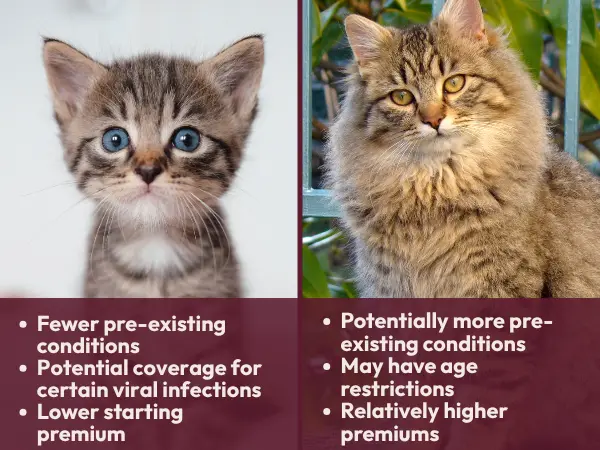
Some pet parents choose to enroll their cat in insurance soon after adoption, especially during kittenhood. Depending on the insurer, kittens may be eligible for coverage from around 4 to 7 weeks of age. Starting early can offer several advantages:
- Potential coverage for viral infections – If viral infections such as FHV-1, FIV, or FeLV develop after enrollment and applicable waiting periods, related veterinary care may be eligible for coverage depending on the policy.
- Fewer pre-existing conditions – Kittens and younger cats may have fewer documented health issues when they enroll. If conditions such as allergies, diabetes, or certain chronic problems develop after enrollment and applicable waiting periods, they may be eligible for coverage under the policy.
- Protection during a curious, active life stage – Kittens are naturally playful and adventurous, which can increase the chance of falls, accidental injuries, foreign-object ingestion, and other mishaps. Eligible treatment costs may be partially reimbursed under accident or accident-and-illness coverage.
- Coverage for common kitten illnesses – Young cats can be more vulnerable to issues such as upper respiratory infections, intestinal cat worms, gastrointestinal illness, cat ear infections or mites, ringworm, and the like. Accident-and-illness insurance may help reimburse eligible veterinary expenses if these conditions arise after coverage begins.
- Lower starting premiums for kittens – Many insurers charge less to insure younger cats than older cats, although premiums can increase over time as the cat ages.
b. Cat Insurance for Older or Senior Cats
Some cat parents may choose to prepare for veterinary costs in other ways before purchasing insurance. Others may adopt an adult or senior cat and look into coverage later in life. In either case, enrolling at an older age can come with a few limitations:
- More conditions may be considered pre-existing – As cats age, they have more time to develop health issues that may be excluded from a new policy.
- Premiums are often higher for older cats – Insurance generally becomes more expensive as a cat gets older and the likelihood of health concerns increases.
- Some insurers set enrollment age limits – Certain providers restrict how old a cat can be when first enrolled, while others may have different coverage rules for senior cats. Checking these requirements early can help pet parents plan ahead.
G. Common Exclusions to Clarify
While cat insurance can help with many unexpected accidents and illnesses, some expenses are commonly left out of standard policies.
1. Routine Care or Wellness
Unless a wellness add-on is purchased, standard cat insurance usually does not include preventive or routine care. This can include annual exams, vaccinations, dental cleanings, parasite prevention, spaying or neutering, and other wellness services.
2. Weight Loss Programs
Most cat insurance policies do not cover weight-loss programs or treatment aimed solely at obesity. However, if weight changes are associated with an eligible underlying medical condition, related diagnostic testing or treatment may be covered depending on the policy.
3. Pre-Existing Conditions
Pre-existing conditions are commonly excluded in cat insurance plans. (NAIC.org) If a condition appears before enrollment or during an applicable waiting period, it may be excluded from future coverage.
This can apply to long-term conditions such as diabetes, allergies, arthritis, or kidney disease, as well as shorter-term issues like ear infections, wounds, respiratory infections, or fractures if they occur before coverage becomes active (i.e., the waiting period is over).
4. Orthopedic & Bilateral Conditions
Some policies place special restrictions on orthopedic or bilateral conditions, especially when a similar problem has already affected the opposite side of the body. For example, if a cat has hip dysplasia or patellar luxation before enrollment, a later issue in the corresponding limb may also be excluded.
5. Cases Seen as ‘Neglect’ or Opting Out of Recommended Care
Some insurers may refuse coverage when a condition could reasonably have been prevented or became worse because recommended care was not followed. This can include:
- Vaccine-preventable diseases in cats that were not kept up to date on recommended vaccinations
- Advanced dental problems linked to not following veterinarian-recommended care
- Complications that develop because recommended treatment was declined or significantly delayed

→ Get discounts for any veterinary service at Sploot. SplootPack™ is a pet care membership that pays for itself, helping pet parents save more than $650 yearly at Sploot’s vet clinics in Denver, Colorado Springs, Salt Lake City, and Chicago! Get 3 FREE check-ups, 15% off dental care, 10% off all vet care services, exciting perks, and more. Learn more about SplootPack™ or call us for any questions!
H. Waiting Periods, Deductibles, & Yearly Limits
Aside from common exclusions, we recommend that pet parents look into the following before choosing a cat health insurance plan:
1. Percentage Covered or Reimbursement Rate
The reimbursement rate is the percentage of an eligible veterinary bill that a cat insurance policy may pay back after the deductible and other policy terms are applied. For example, a plan with a 90% reimbursement rate generally pays a larger share of covered expenses than a plan with a 70% rate. Higher reimbursement rates can also come with higher premiums.
2. Waiting Periods
A waiting period is the stretch of time after enrollment when certain benefits are not yet active. If a cat develops a condition during this period, related expenses may be excluded, and the condition could later be treated as pre-existing.
Waiting periods depend on both the insurer and the type of coverage. Accident and illness waiting periods are often measured in days or weeks, while some orthopedic conditions may be subject to longer waiting periods when covered by the plan.
3. Cat Insurance Deductibles
A deductible is the amount a cat parent must pay toward eligible veterinary expenses before insurance reimbursement begins. Many plans use an annual deductible, which resets each policy year. For instance, with a $500 annual deductible, eligible expenses generally need to reach that amount before reimbursement starts.
Some policies instead use a per-condition deductible, where a separate deductible applies to each covered condition. Depending on the policy, this may apply for the lifetime of that condition rather than resetting every year.
4. Yearly Caps or Coverage Limits
An annual coverage limit is the maximum amount an insurer will reimburse for eligible expenses during a policy year. For example, if your plan has a $10,000 annual limit, insurance will generally stop reimbursing covered expenses once eligible reimbursements reach that limit. Some plans offer unlimited annual coverage.
A Realistic Expectation of Cat Insurance for Financial Preparation
Cat insurance can make unexpected veterinary expenses easier to manage, but it will not cover every cost in full. Deductibles, reimbursement percentages, annual limits, exclusions, and non-covered services all influence how much a cat parent may still need to pay. This is why comparing policies carefully before enrolling is so important.
It can also help to keep savings available or have access to financing. Many cat insurance plans use a reimbursement model, which means pet parents may need to pay the veterinary bill first and then wait to be reimbursed for eligible costs.
As you compare cat insurance options, these resources can help you make a more informed decision:
- Pet parent forums and customer reviews – These can offer insight into claim experiences, reimbursement timelines, customer service, and how different providers handle real-life cases.
- Cat insurance comparison websites – Comparison tools can make it easier to review premiums, deductibles, reimbursement rates, coverage limits, and exclusions across multiple providers.
- Your veterinarian and veterinary professionals – Veterinarians, veterinary nurses, and technicians may be familiar with how different insurance plans work in practice and can share general insights based on what they have seen with other pet parents.
Sploot: All-in-One Veterinary Care & Pet Parent Guidance
Whether you’re comparing cat insurance, planning preventive care, or looking for a trusted vet clinic Sploot Veterinary Care is here to support you.
At Sploot, we provide all-in-one veterinary care, including primary, urgent, and dental care services under one woof™. Our team delivers thorough, compassionate care with clear pet parent guidance and a Fear Free approach designed to help make visits more comfortable for cats of all ages and temperaments.
Visit one of our vet clinics in Denver metro, Colorado Springs, Chicago, and Salt Lake City, open 365 days a year with extended hours. Easily book an appointment online or through the Sploot Vets app today!
Pet Care Memberships: An Added Layer of Financial Support
Vet clinic memberships can be a great addition to pet insurance, offering extra perks and discounts on services, including some that insurance might not cover. While they’re not insurance themselves, they can help make vet care significantly more affordable.
We offer SplootPack™, a membership that can save you up to $650+ annually on essential vet care. While we always encourage pet parents to get pet insurance when possible, SplootPack™ gives you automatic savings at Sploot whether or not your pet is currently insured.
Get 3 FREE wellness exams or check-ups, 10% OFF on all Sploot’s services, and more exclusive discounts! Learn more about SplootPack™ today!